



When you think of Namibia, you immediately imagine endless landscapes, glowing dunes and, above all… pure wilderness. This southern African country offers an exceptional setting for an unforgettable safari, far from the crowds and as close as possible to the animals.
In this article, we take you on a complete exploration of Namibia’s wildlife: the emblematic species, where to spot them, the best times to go and our advice on how to make the most of your safari.
Namibia’s emblematic large animals
When we think of a safari, we often dream of encountering the great savannah classics. In Namibia, these emblematic animals do indeed appear, but often in surprising environments, between deserts, arid savannahs and rocky plateaus.
➡️ And if you dream of living this adventure at your own pace, with a tailor-made itinerary, well-chosen accommodation and peace of mind, we recommend that you call on the Marco Vasco travel agency. Their expertise is ideal for organizing your trip to Namibia without worrying about logistics.
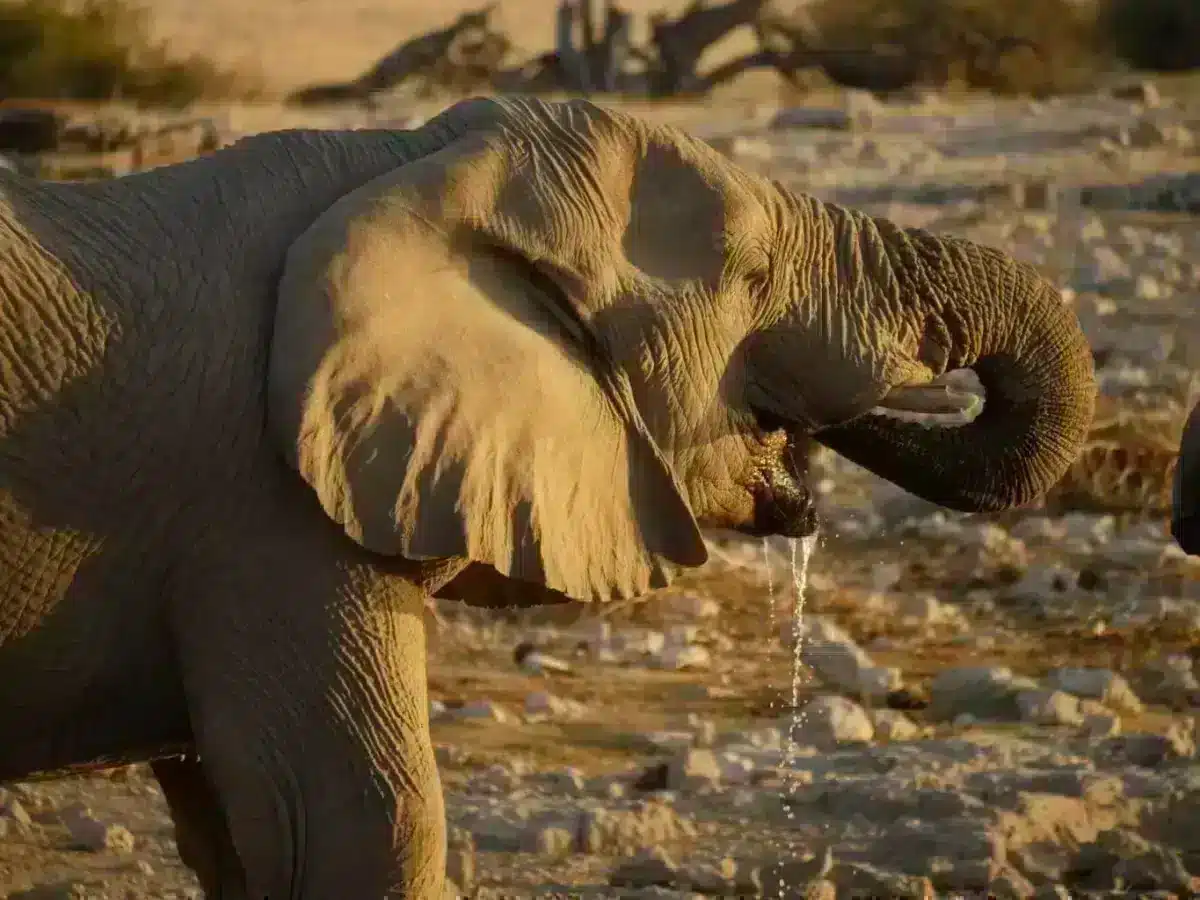
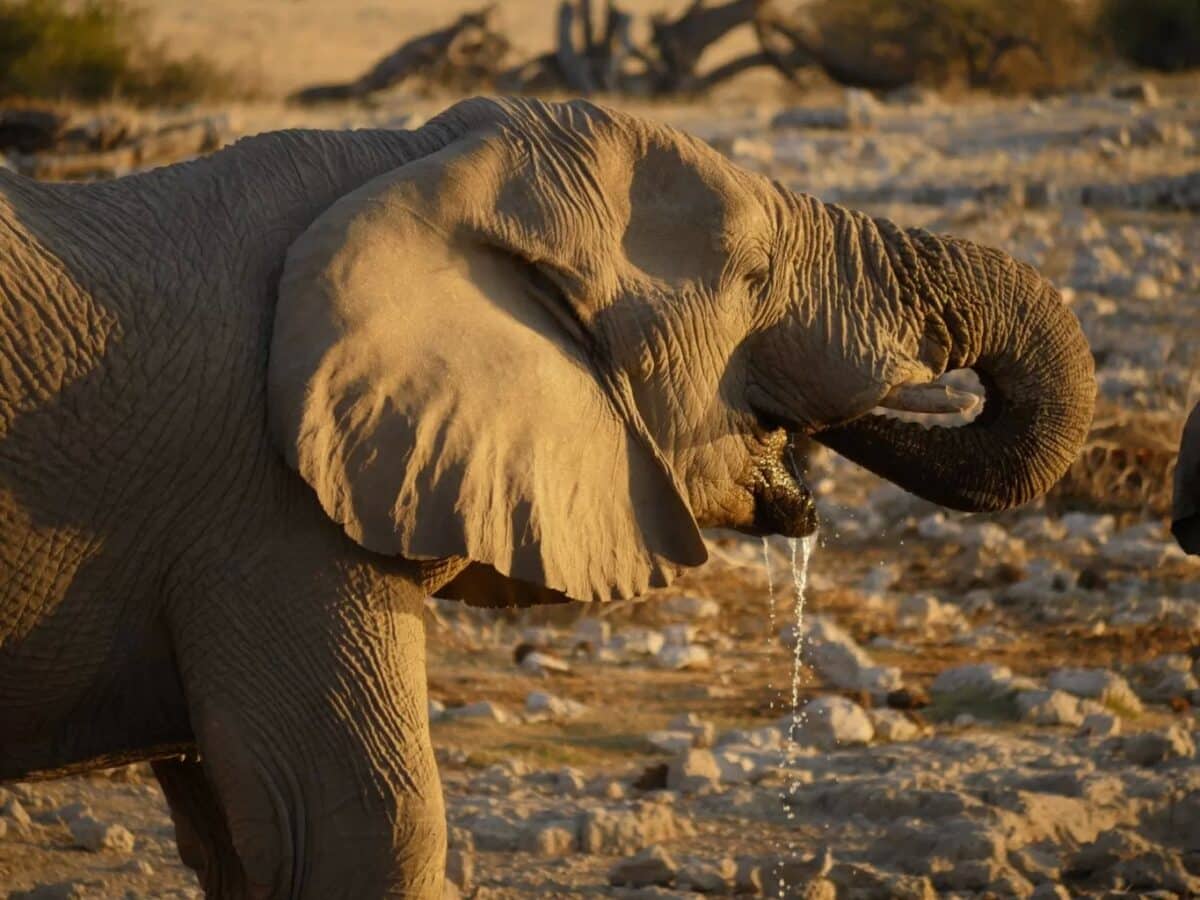
Desert elephant: the adaptable giant
This is without doubt one of Namibia’s most fascinating animals. Thedesert elephant, which you can observe in the Damaraland region, has adapted to extreme living conditions.
More slender and mobile than their East African cousins, they travel long distances every day in search of food and water.

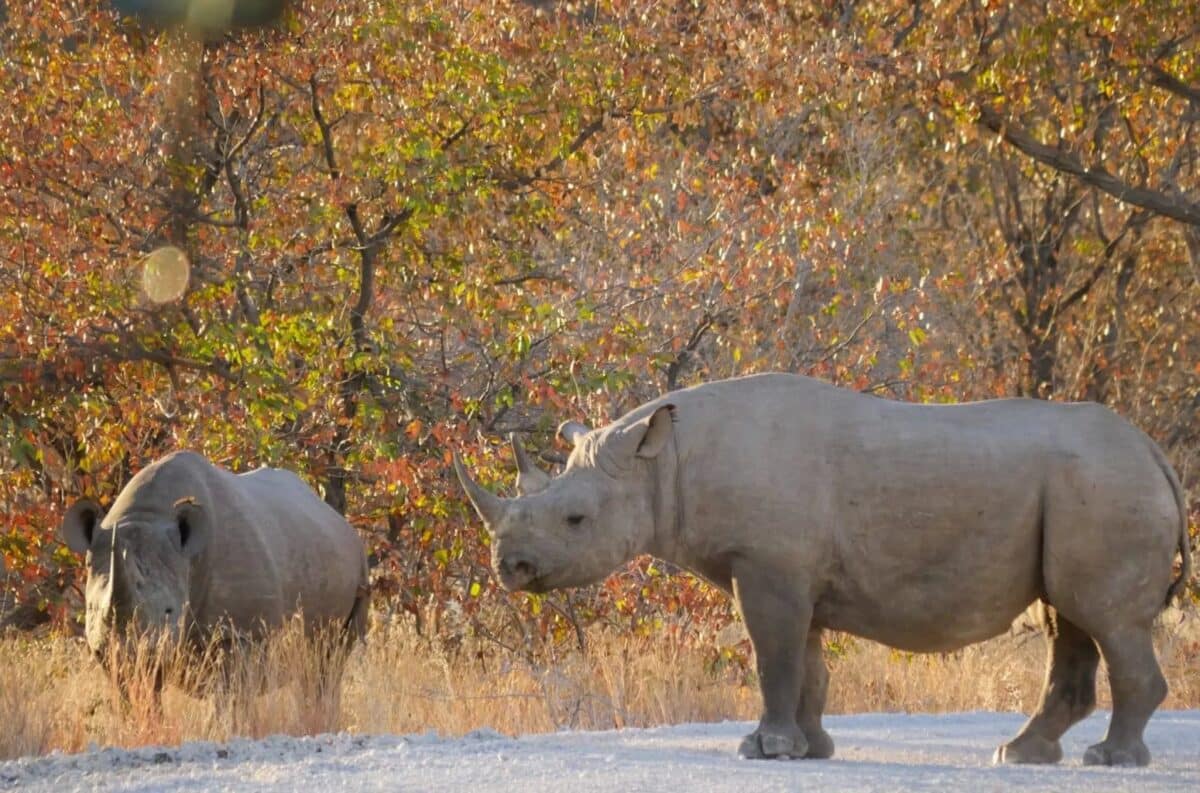
Black and white rhinos: treasures under surveillance
Namibia is one of the few countries where you can still see both species of African rhino. The black rhino, smaller and more discreet, is particularly protected and often lives in private reserves such as Ongava or Okonjima.
We were able to observe the more imposing white rhinoceros in Etosha Park.
Lions and cheetahs: predators of the savannah
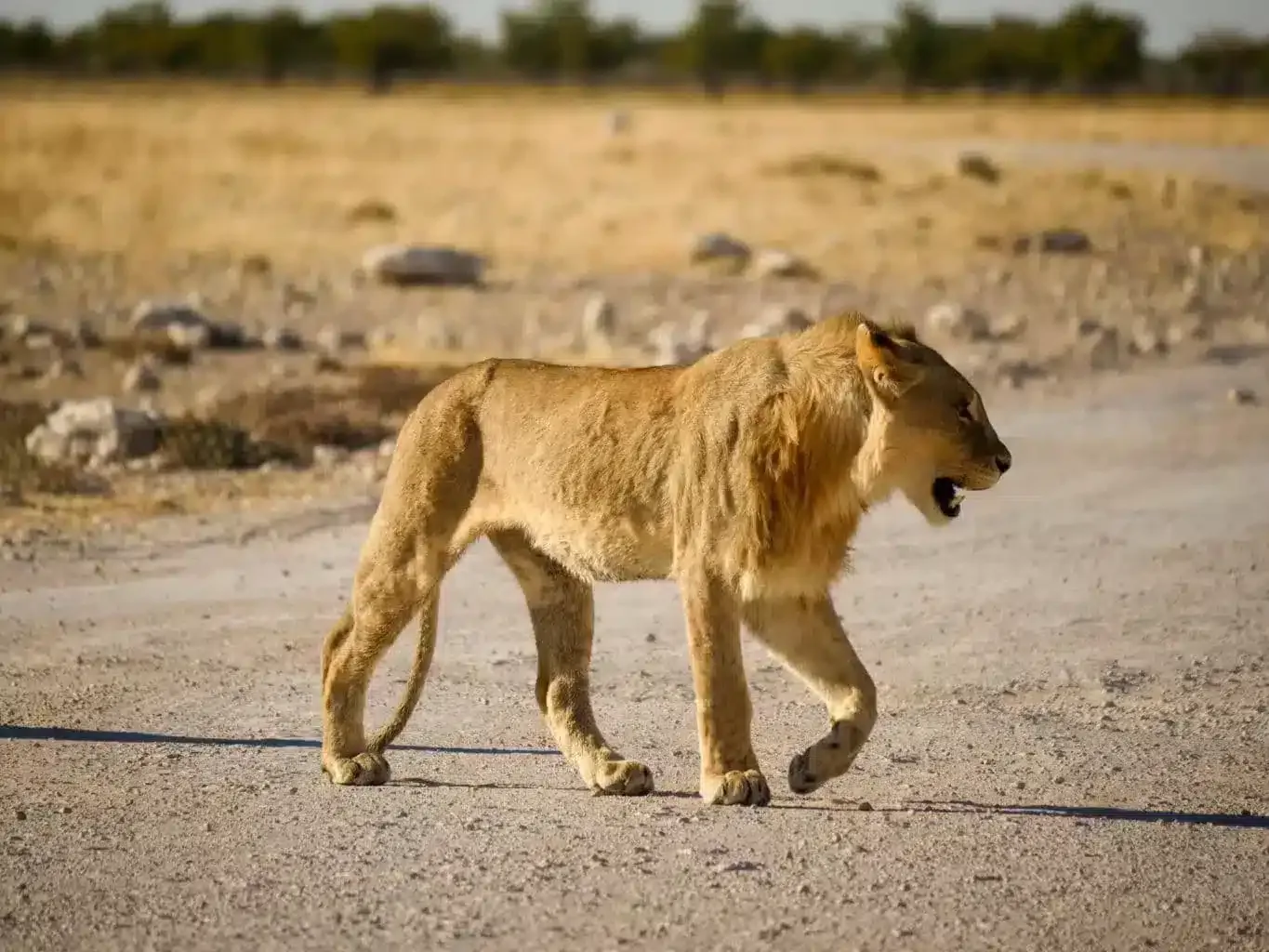
The lion remains the king of safaris, and in Namibia we were able to admire several of them inEtosha Park at sunrise.
Rarer, but just as impressive, desert lions, sometimes found in Kaokoland or Damaraland, are hardy hunters capable of surviving in arid conditions.
The more discreet cheetah can sometimes be seen on the great plains of the central part of the country, or in reserves dedicated to its protection. The Cheetah Conservation Fund, near Otjiwarongo, is doing a remarkable job of preserving this species.
Giraffes and zebras: the elegance of the plains
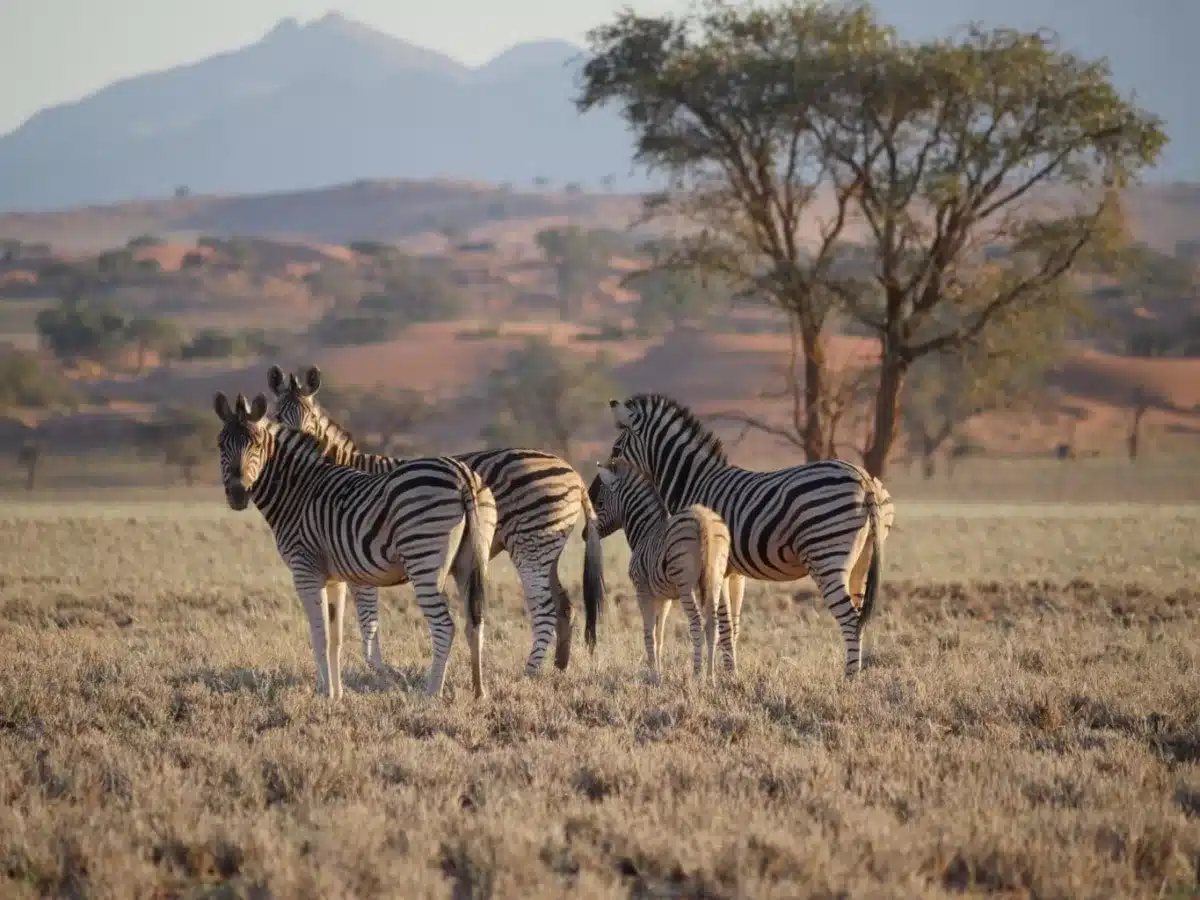
These are undoubtedly the animals we saw most often, whether on the roadside, in private reserves or in large numbers around waterholes in Etosha Park.

Hippos and crocodiles: the giants of the Caprivi Strip
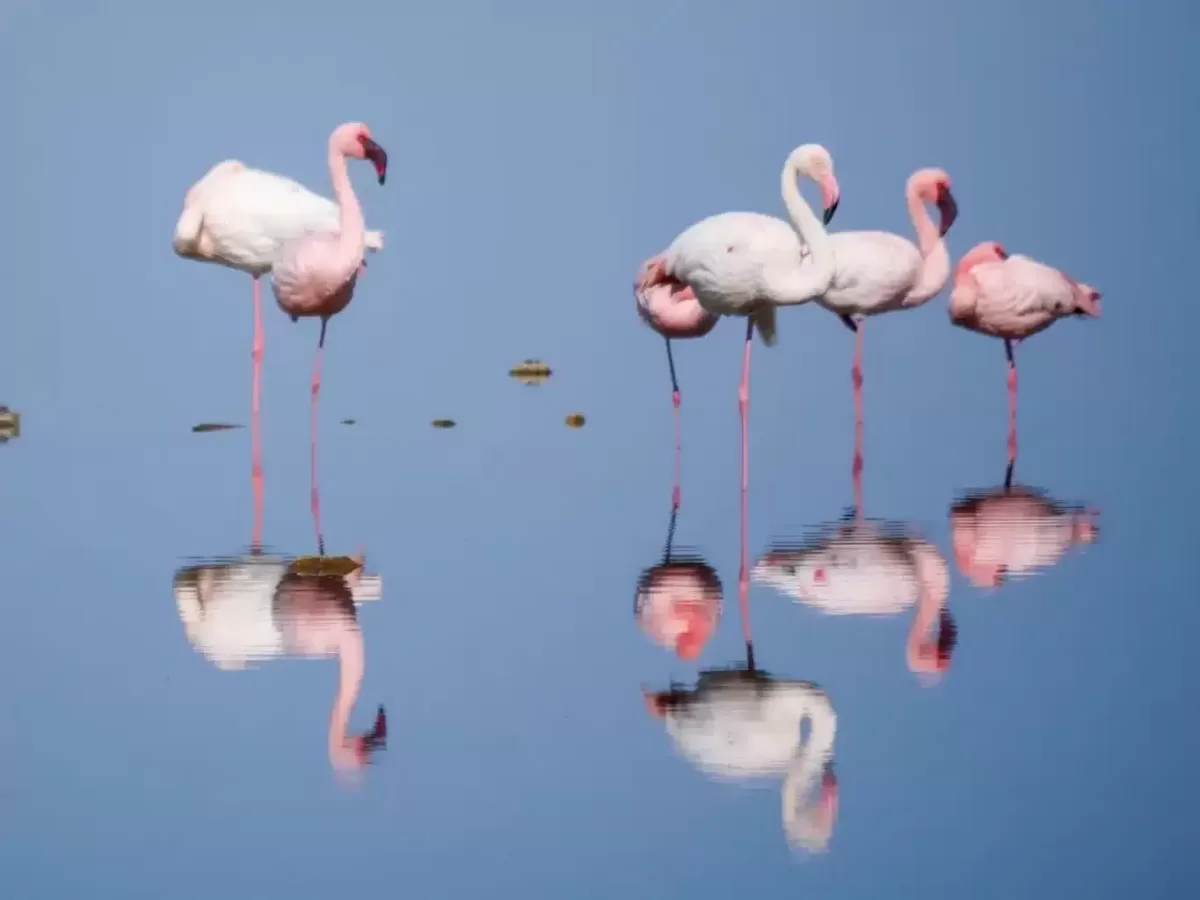
If you venture into the north-east of Namibia, in the Caprivi Strip, a completely different atmosphere awaits you. Here, rivers, swamps and a very different fauna take center stage. You’ll see hippos, crocodiles and numerous water birds.
Where to see animals in Namibia? The best places to see animals
Namibia’s animal wealth is not limited to a single location. What makes a trip to Namibia so exceptional is the diversity of landscapes and ecosystems where animals roam freely. Each region has its own particularities and emblematic species.
Etosha National Park: the great classic
This is our number-one must-see. Etosha National Park is huge, easily accessible and perfectly suited to wildlife observation. Most of the roads are passable with a simple 4×4, and numerous waterholes (both natural and man-made) attract animals in all seasons.
Driving slowly, we were able to see elephants, lions, giraffes, zebras, antelopes and even rhinoceroses in a single day.

Damaraland: in the footsteps of desert elephants
Lesser-known, wilder Damaraland is also one of our favorites. Here, elephants have learned to survive in extreme conditions, without permanent water. You’ll be able to observe them in complete freedom in grandiose landscapes of red rock, dry riverbeds and silent hills.
It may take a little patience to find them, but local lodges often organize guided outings to maximize your chances.
The Caprivi Strip: green and aquatic Namibia
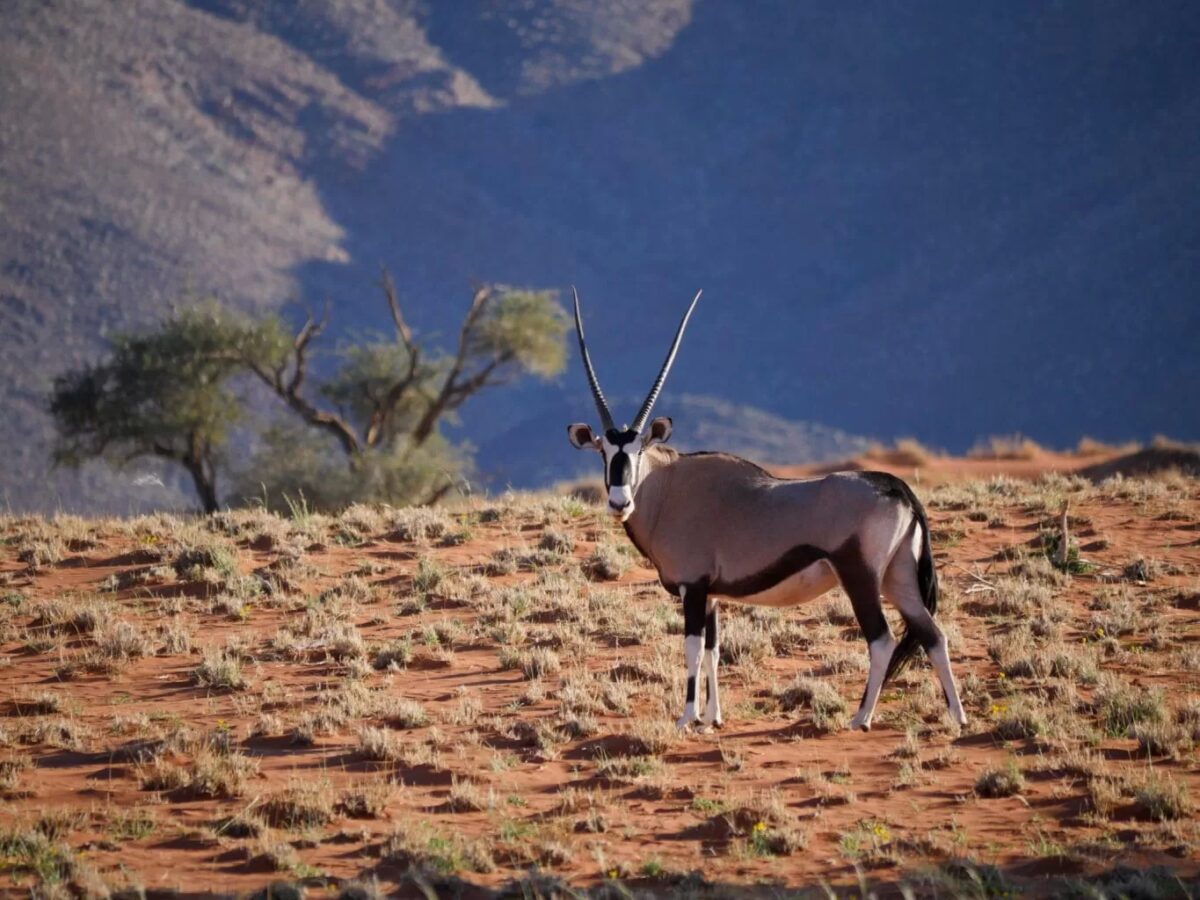
Total change of scenery. In the far north-east of the country, the Caprivi strip offers an almost tropical atmosphere. Here, rivers meander through forests, green plains and villages. Here you’ll find a fauna very different from the rest of Namibia: hippos, crocodiles, buffalo and an impressive diversity of birds.
Private reserves: exclusive safaris and respect for wildlife
Reserves such as Daan Viljoen or Naankuse Wildlife Sanctuary, near Windhoek, offer the chance to observe antelope, giraffe, warthogs and sometimes even felines in semi-natural environments.

How to maximize your chances of seeing animals?
Seeing animals in Namibia is never guaranteed, but there are many ways to make the most of your safari.
Choosing the right times of day
Wildlife is most active in the cooler hours, early in the morning or at the end of the day. This is when animals leave their shelters to come and drink, hunt or move around.
In the middle of the day, the heat forces the animals to rest in the shade, making it much harder to see them.
The right time to go
- The dry season, between May and October, is the best time to observe wildlife. We went in August, and saw a lot of animals and birds for ourselves. During these months, waterholes are scarcer, and animals naturally congregate there, making it easier to spot them. The grass is also lower, which clears the view.
- The rainy season (November to April), on the other hand, transforms the landscape, but the animals are more scattered, and sometimes hidden in denser vegetation. That said, it’s also a wonderful time for color, births and migratory birdwatching.
Adapting your safari mode
In Namibia, you can choose to go on safari:
- Self-sufficiency with a 4×4: total freedom, ideal for exploring the parks at your own pace.
- With a local guide: to maximize your chances of spotting rarer animals.
Paying attention to the smallest details
Sometimes, all it takes is a movement in a bush, a discreet noise or a sudden flight to guess the presence of an animal. You soon learn to drive slowly, to listen, to watch the tracks, to observe the behavior of other species (zebras are often the first to smell a predator).
We also advise you to turn off the engine regularly, especially near waterholes, and wait. This is where we were lucky enough to see the most animals.

A safari in Namibia means entering a world where time slows down, where every silhouette on the horizon can be a surprise, and where nature takes its rightful place.

0 commentaires