



Wondering how to visit the Ria Formosa Natural Park? Which boat tour should you choose? Which island should you explore? Which birds can you spot? Situated where the Atlantic Ocean meets the mainland, the Ria Formosa Natural Park is one of the Algarve’s most spectacular natural sites. Its landscape of lagoons, barrier islands, marshes, and sandbars offers a more peaceful atmosphere than the coastal resorts.
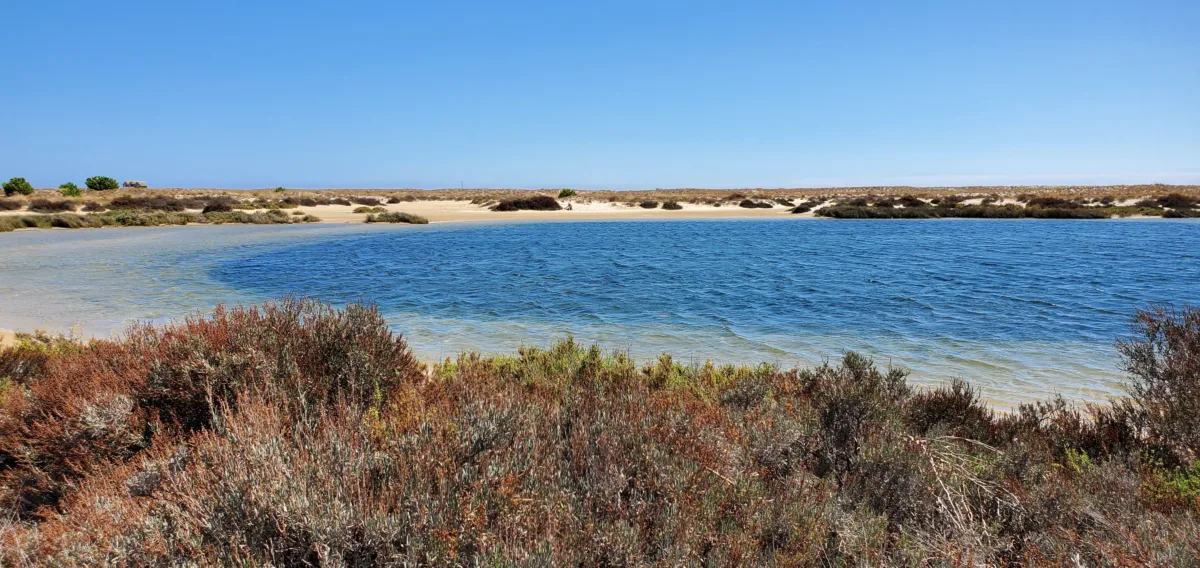
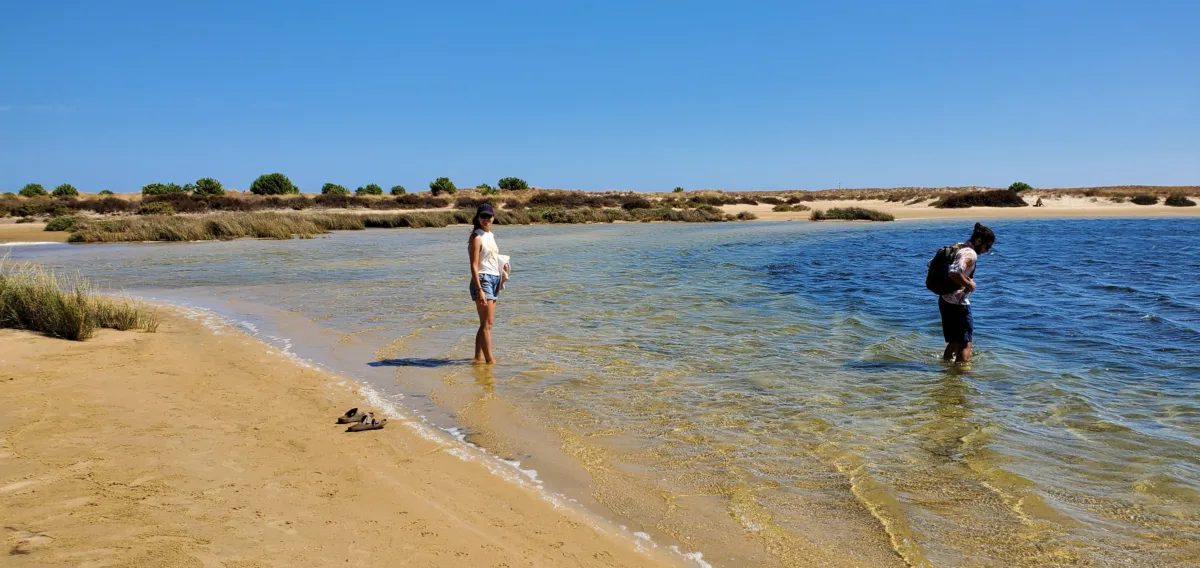
During our 10-day road trip in the Algarve—including three days in Olhão—we loved exploring this unique region: boat trips, car-free islands, fishing villages, and vast sandy beaches.
In this guide, we’ll share all our tips for planning your visit to the Ria Formosa, choosing the right starting point, and making the most of the natural park.
Essential Information for Planning Your Visit to the Ria Formosa.
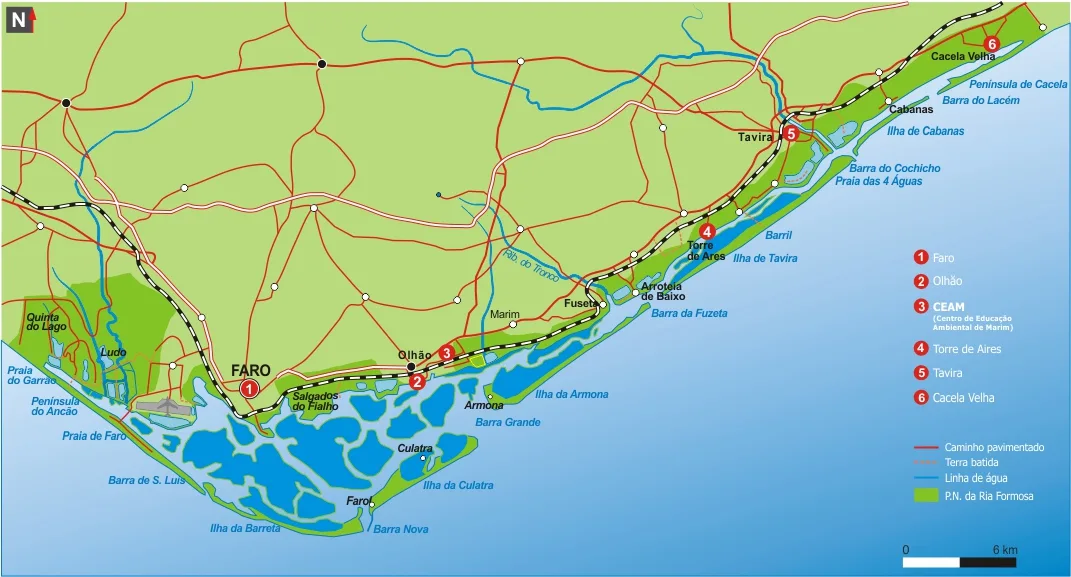
The nature reserve is located in the eastern Algarve and stretches for nearly 60 km, from Ancão to Manta Rota.
- Olhão: Armona, Culatra, and Farol
- Faro: for Barreta, Farol, and trips out to the Atlantic
- Tavira and Cabanas: for the islands east of the park
- Guided cruises: depart from Olhão to explore three stops on the islands, or depart from Faro for a shorter trip
- Ferry: to spend the day on an island and explore it on foot
- Dolphin-watching tour departing from Faro : cruise on the Atlantic; sightings not guaranteed
Ferry schedules, itineraries, and the languages available for excursions vary by season. Be sure to check the details before booking.
- One day: for a cruise or a ferry trip to an island
- Two to three days: to combine a boat trip, a visit to an island, and exploring Olhão or Faro
- Spring and fall: temperatures are often more pleasant, and visitor numbers are lower
- Summer: More Ferry Routes, but More People
What is the Ria Formosa Natural Park (+ map)?
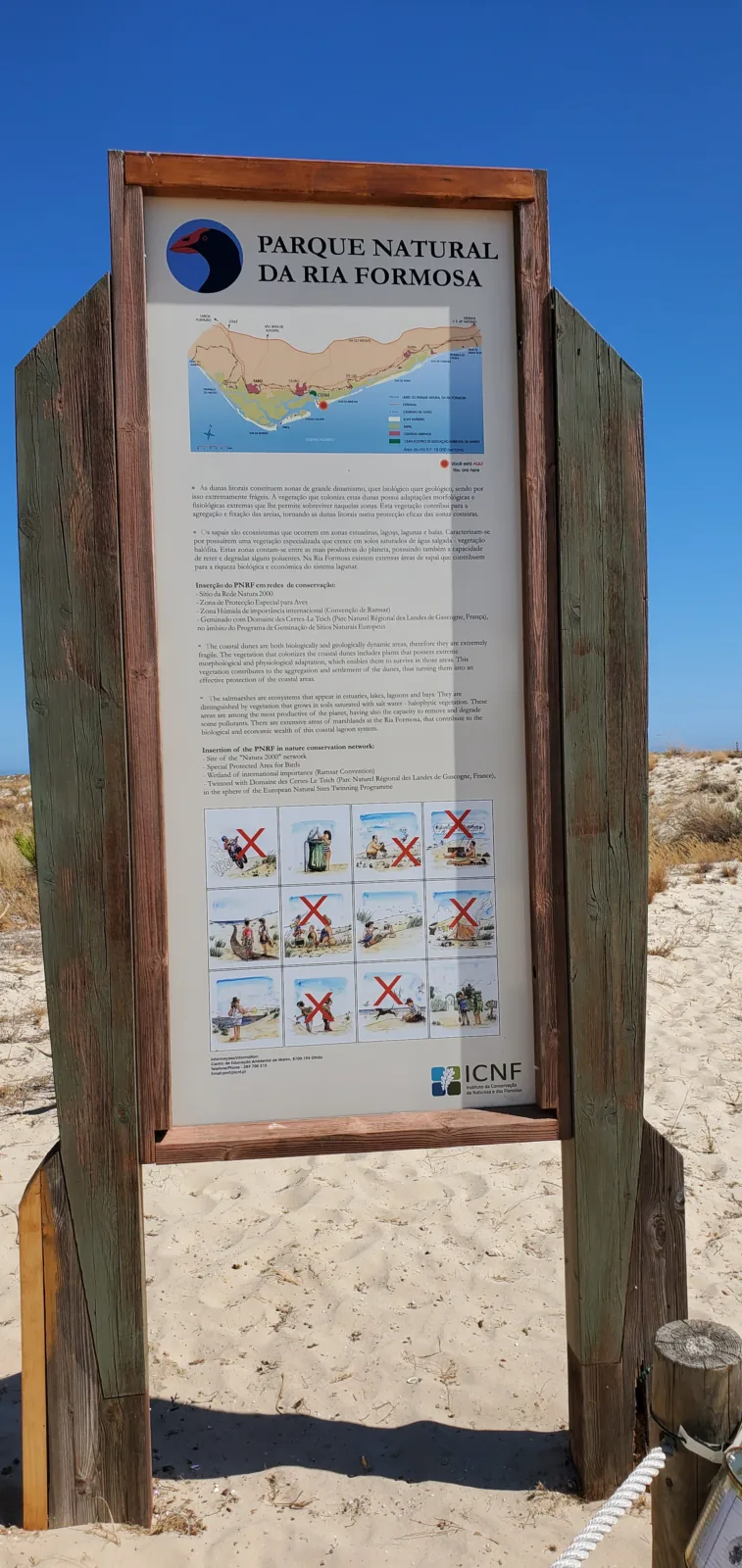
The Ria Formosa Natural Park covers nearly 17,900 hectares and stretches about 60 km from Ancão to Manta Rota in the eastern Algarve.
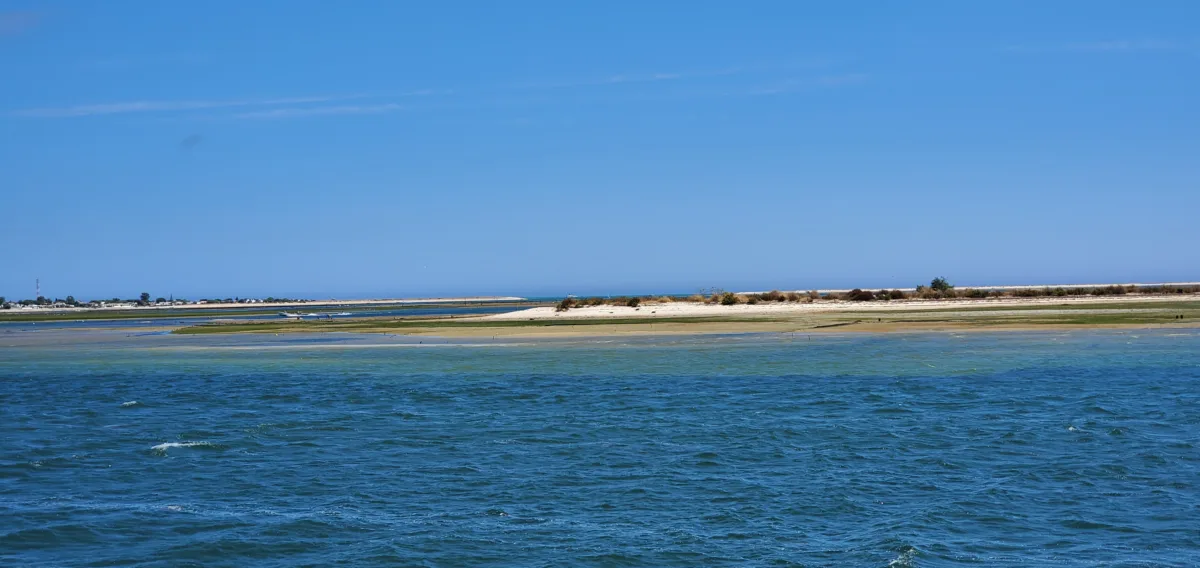
Here, there are no towering cliffs like those at Ponta da Piedade in the western Algarve, but rather a vast, sheltered lagoon. It is separated from the Atlantic by two sandy peninsulas—Ancão to the west and Cacela to the east—as well as five barrier islands: Barreta, Culatra, Armona, Tavira, and Cabanas.
It features marshes, mudflats, dunes, salt flats, and channels whose appearance changes with the tides. This diversity of habitats accounts for the park’s natural richness.
What birds can you see in the Ria Formosa?
The Ria Formosa is an important wetland for resident, migratory, and wintering birds. Depending on the season and habitat, visitors can spot the black-winged stilt—the park’s emblem—as well as flamingos, spoonbills, egrets, herons, white-winged stilts, avocets, and terns.
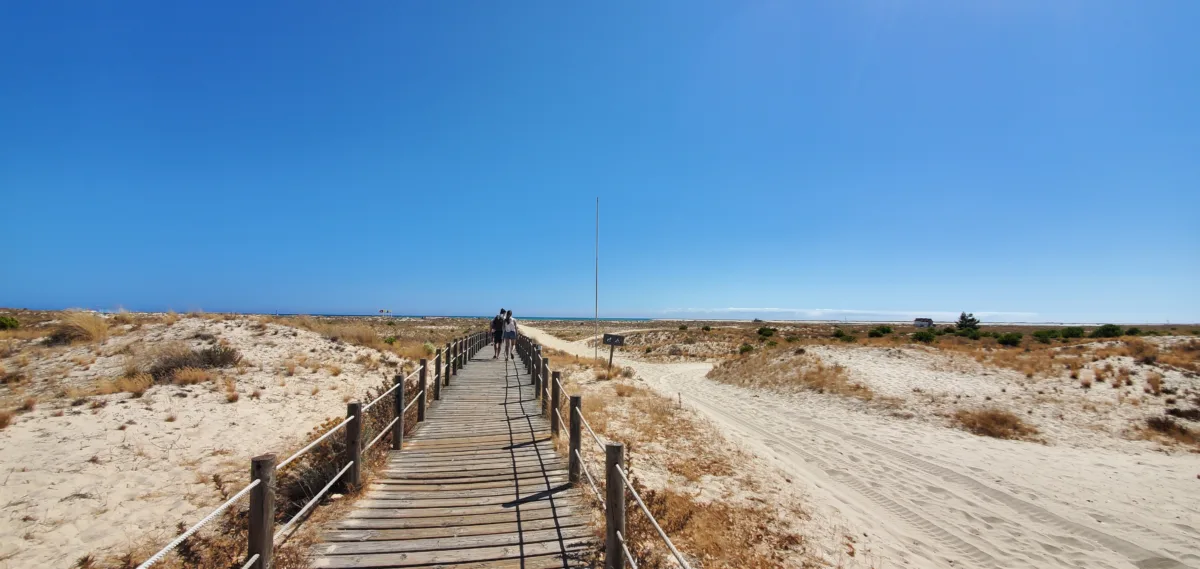
During our boat trip, we saw flamingos, egrets, and herons with our own eyes. To spot them more easily, bring binoculars, keep your distance, and stay on the designated paths or boardwalks.
Explore the park by boat
Cruise, ferry, or dolphin-watching tour: which should you choose?
- Choose a guided cruise if you want to learn about the lagoon and explore several islands during a single trip.
- Choose the ferry if your priority is to spend several hours on a single island, at your own pace and on a tighter budget.
- Book a dolphin-watching tour if you’d like to go out to sea. The boat crosses the Ria Formosa before reaching the Atlantic, and sightings are never guaranteed.
For first-time visitors, a boat tour is a great way to learn how the lagoon works and to explore several islands. Most tours depart from Olhão and Faro.
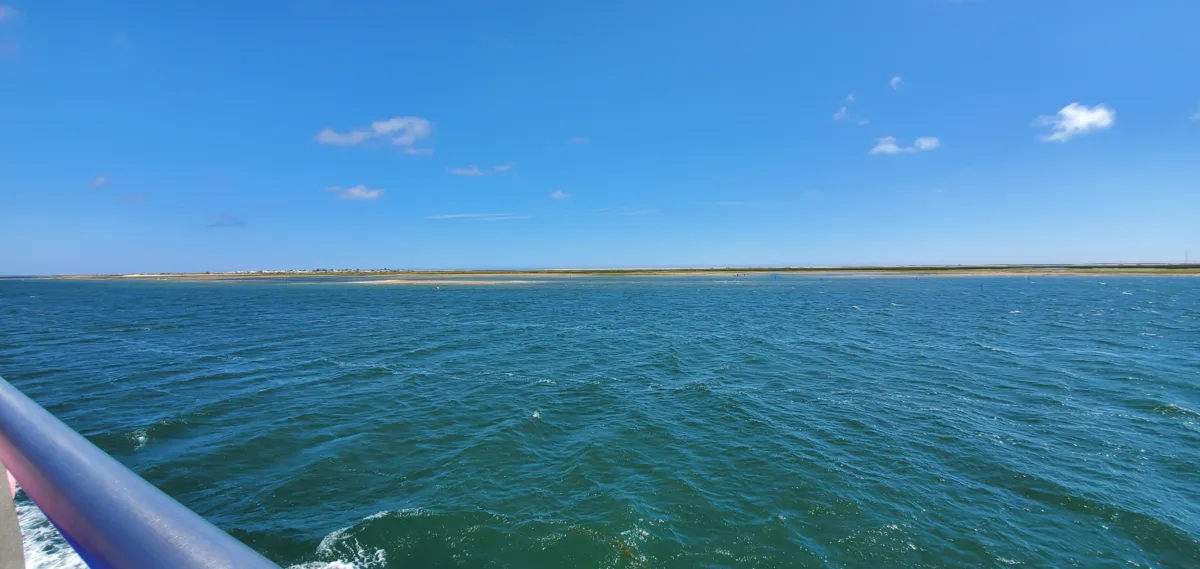
As for us, we set sail from Olhão for a full day of cruising through the lagoon, skirting almost surreal sandbars and exploring several stops along the way—at Farol, Culatra, and Armona—each with a very different atmosphere—and we received plenty of information about the local wildlife and the lives of the region’s residents.
For a first visit to the park, we recommend a approximately 5-hour tour departing from Olhão that we chose. It takes you to three stops on the islands and lets you learn more about the lagoon’s wildlife. A French-speaking guide is available on certain dates: be sure to check the language option when booking. We spotted many birds as part of a small group and really enjoyed how the tour was organized.
If you’re staying in Faro, the tour listed below lasts about three hours. This is not the same itinerary as the five-hour tour departing from Olhão: be sure to compare the stops, duration, and the guide’s language when booking.

Dolphin Watching Off the Coast of Faro
This 2.5-hour tour departing from Faro crosses the lagoon and then heads out to the Atlantic to look for dolphins and other marine animals. Sightings are not guaranteed, as the animals are wild. If you’re trying to decide between several starting points, our review of a dolphin-watching excursion in Albufeira offers another option in the Algarve.

Explore the islands by ferry, then on foot
Which island to choose in the park?
The lagoon is protected by two peninsulas and five barrier islands. Praia de Faro is located on the Ancão Peninsula; it is not one of the five islands. Farol is not another name for Culatra, but one of the three main settlements on the island of Culatra. Finally, Cabanas is indeed one of the five barrier islands. The best choice depends mainly on your starting point and the kind of atmosphere you’re looking for.
| Location | Atmosphere and Interest | Easiest way to get there |
|---|---|---|
| Ancão Peninsula, Faro Beach | A large, easily accessible beach that’s livelier in the summer | Road and Bridge from Faro |
| Barreta, also known as Ilha Deserta | A wild, largely undeveloped setting | Boat or tour from Faro |
| Culatra | Fishing village and long beach on the ocean side | Ferry from Olhão or Faro |
| Farol, on the island of Culatra | Houses, a lighthouse, and a beach at the western tip of Culatra | Ferry from Olhão or Faro |
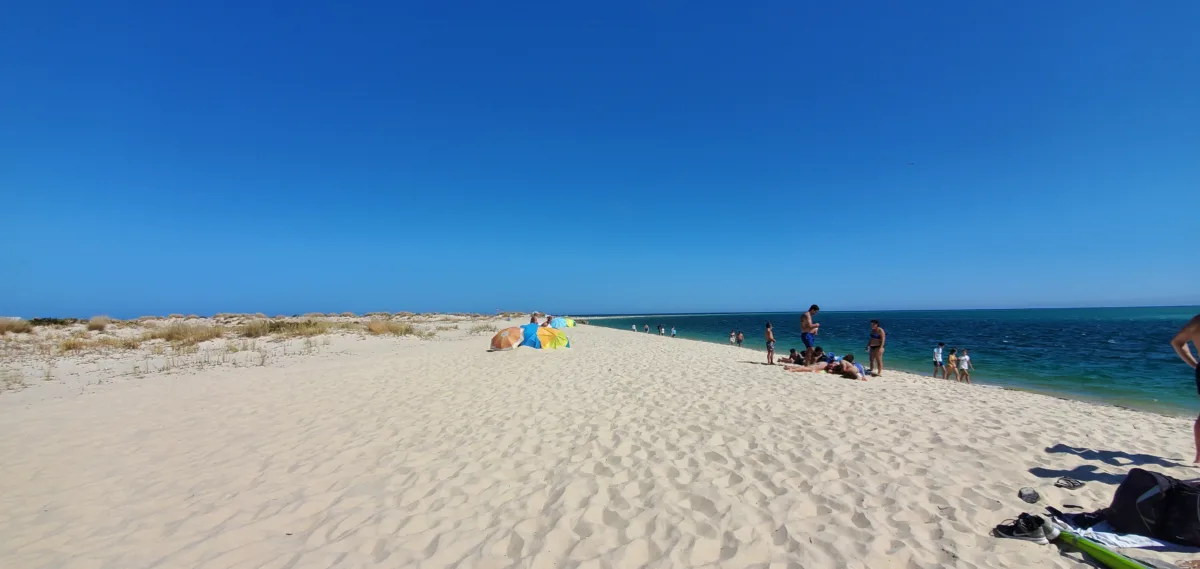
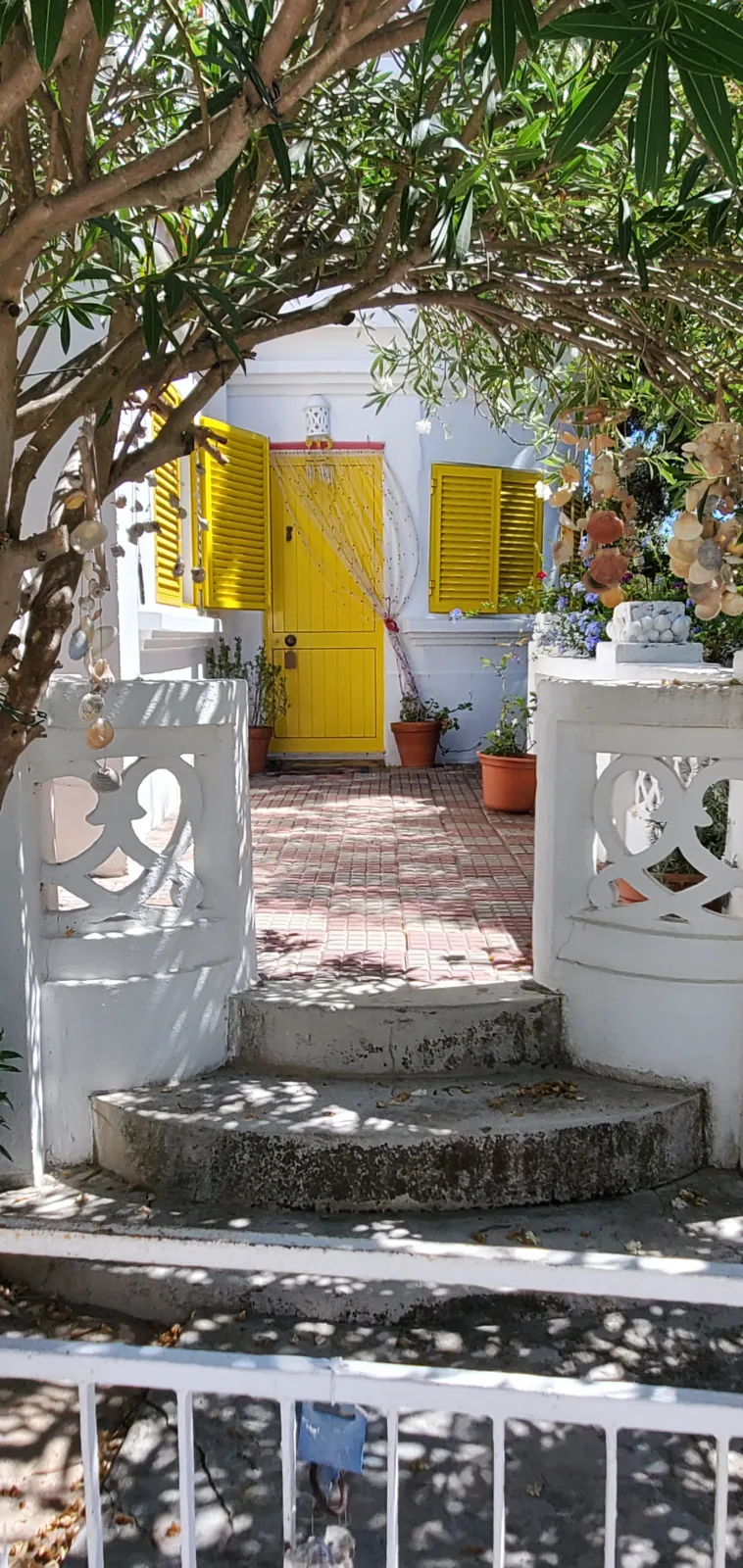
| Armona | A car-free village and a long beach on the ocean side | Ferry from Olhão |
| Tavira | A long island with several access points, including Barril Beach | By boat from Tavira or Quatro Águas, or by footbridge to Pedras d’El Rei, followed by a walk or a ride on the little train |
| Cabanas | A strip of sand across from the village of Cabanas de Tavira | A short boat ride from Cabanas de Tavira |
We decided to spend a day in Armona. We share our experience of this visit and all our tips in our guide to exploring Armona Island.
This sandy strip protects the lagoon and creates a constant sense of being between two worlds: the sea on one side, the ria on the other.
Take the ferry from Olhão
From the Olhão pier, ferries run to Armona, Culatra, and Farol year-round, with more departures in the summer. The trip takes about 15 to 20 minutes to Armona and 30 to 45 minutes to Culatra or Farol. Schedules and fares vary by season: check the current ferry schedules before your departure and arrive early in July and August. Tickets can be purchased at the ticket counter; online reservations are not available for these regular routes. Be sure to bring cash.
We were even lucky enough to spot a dolphin during the crossing.
We recommend that you purchase your round-trip ticket before boarding. On the islands, the ticket counters don’t open until shortly before departure.

Why choose Olhão or Faro as a starting point?
Faro and Olhão are located on the edge of the lagoon and serve as hubs for ferry and tour departures. Faro is a convenient starting point for trips to Barreta and Farol, as well as for excursions into the Atlantic. Olhão is the easiest starting point for trips to Armona, Culatra, and Farol. Tavira and Cabanas are better suited for the islands located east of the park.
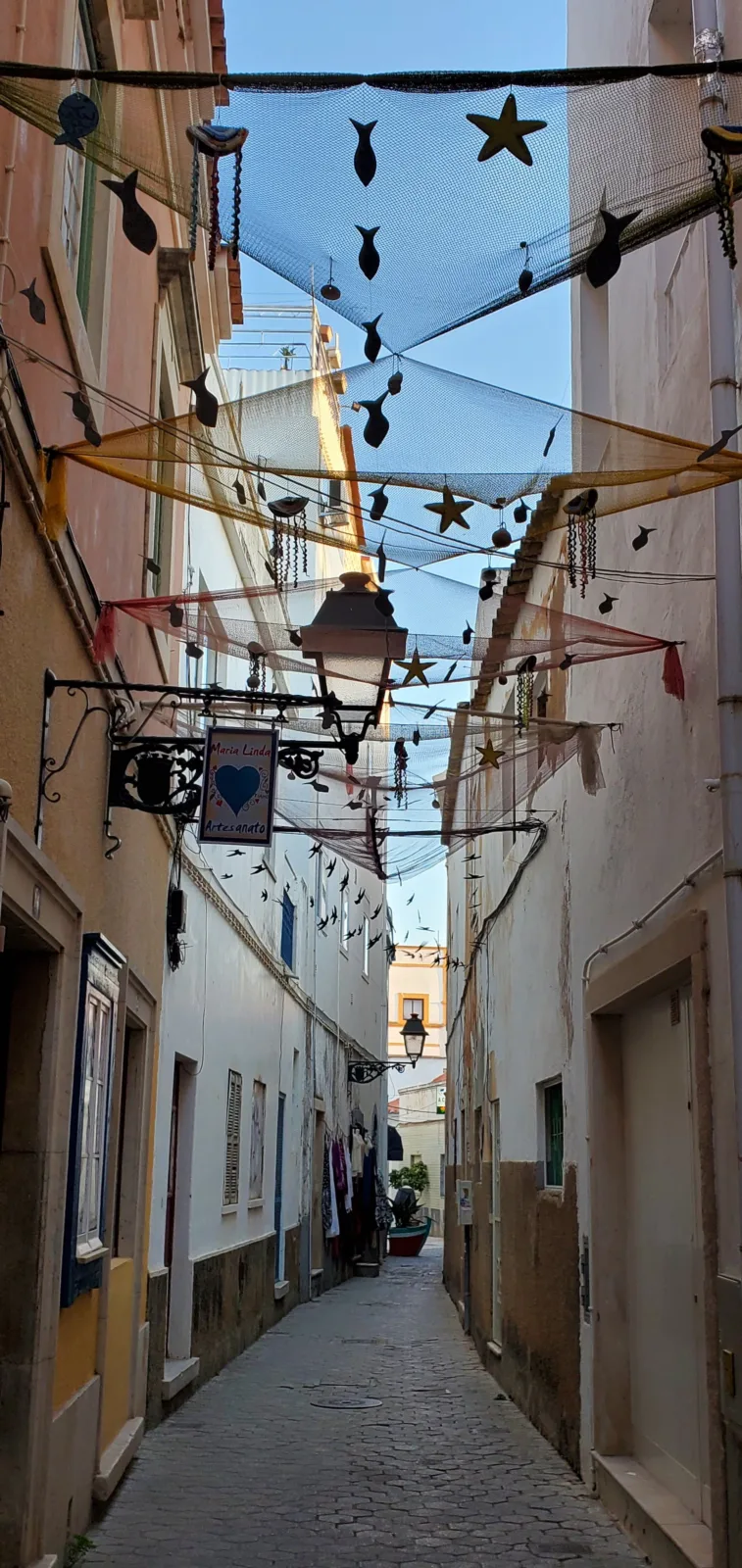
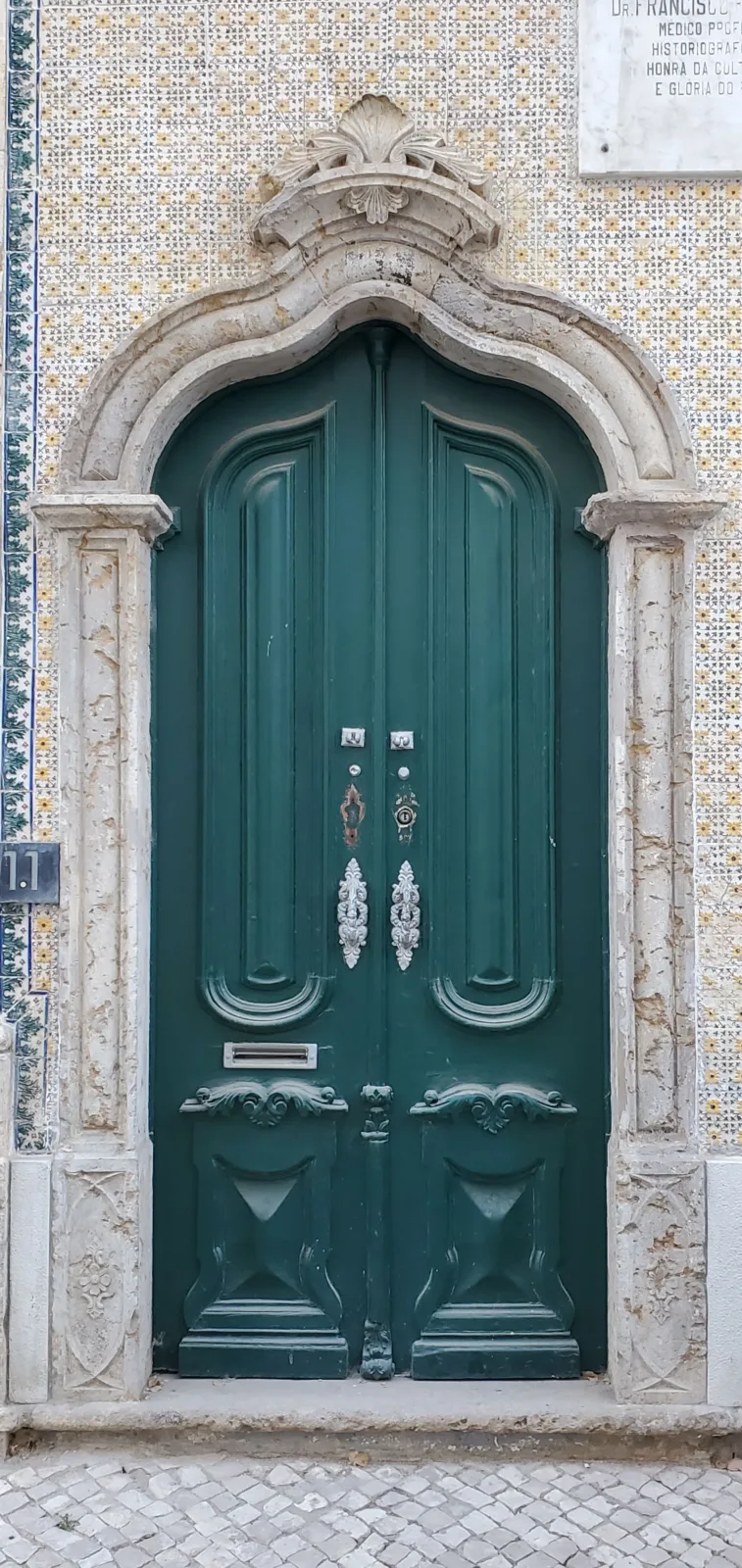
We chose Olhão almost by chance, and the town turned out to be a wonderful surprise. It has retained a genuine local identity, with its cube-shaped houses, narrow streets, and large covered market facing the ria. You can tell that fishing remains at the heart of daily life.
Staying there for two nights gave us the chance to stroll along the harbor, watch the fishermen mend their nets, and have a coffee on a sidewalk café before boarding the boats. Olhão was a better fit for our desire for peace and quiet, while Faro might be more convenient if you’re arriving by train or plane. We share more recommendations and tips in our guide to Olhão.
Practical tips for visiting the Ria Formosa
After spending a few days there, we’ve found that certain things are essential for planning your visit.
Where to stay to visit the park?
To compare this property with other options in the area, check out our selection ofbeachfront hotels with pools in the Algarve.
How do you get to the Ria Formosa Natural Park?
Driving to the Ria Formosa
From Lagos, it takes about an hour to get to Faro and 1 hour 10 minutes to 1 hour 20 minutes to get to Olhão, assuming there isn’t heavy traffic. From there, you can easily explore the area by car, traveling between Faro, Olhão, Fuseta, Tavira, and the various ports from which ferries depart for the islands.
From Lisbon, allow about 3 to 3 hours and 15 minutes to reach Faro or Olhão, traveling mainly on the A2 highway, depending on traffic and your exact destination.
Getting Here Without a Car
Regional trains on the Algarve line connect Faro, Olhão, Fuseta, and Tavira, among other destinations. They allow you to reach the main resorts without a car, but some train stations or beaches require you to walk or take a bus or taxi from there. Check the schedules for your travel dates.
Rent a car to explore the region
A car is still the most convenient way to get around between the park’s various entrances. We provide details on rental companies, insurance, and what to look for in our guide to car rentals in the Algarve.
To compare offers, we use Discover Cars. Before booking, check the security deposit amount, fuel policy, exclusions, and refund terms for the supplemental coverage.
Where can I eat before or after the tour?
Whether you want to eat before or after your boat trip, we’ve compiled a list of our tried-and-true spots in Olhão—including Casa de Pasto Almirante and Taberna D’Olhão—in our Algarve restaurant guide.
What should you plan for a day in the Ria Formosa?
- enough water;
- a hat, sunscreen, and sunglasses;
- a picnic or snacks, depending on the island and how long you plan to stay there;
- cash for tickets and small purchases;
- a lightweight windbreaker for the boat;
- binoculars if you’d like to go birdwatching;
- a swimsuit and a towel if you’re planning to go to the beach.
Be sure to check the tide schedules as well: they have a major impact on the scenery and the areas that are exposed in the lagoon. This wasn’t too much of a change for us, since we live on the Île d’Oléron.
The Algarve remains a region we’ve come to love for its diversity, its landscapes, and its lifestyle. To continue planning your trip, check out our other ideas for things to do in the Algarve.
If you’re planning this trip or have a question, leave us a comment—we’ll be happy to respond. You can also find us on Instagram.

0 commentaires