




Visiting Pompeii is one of those experiences you should have at least once in your lifetime. It’s not like we come here every other day, and it would be a real shame to leave feeling like we chose the wrong ticket or missed out on the most beautiful spots.
If you’re planning a visit to Pompeii, you’re surely eager to explore the site, but you probably also have a lot of questions.
- How much time is required?
- Should we hire a guide?
- What are the must-see places?
- And most importantly, how can you plan this day without wasting time trying to find your way around?

Before our visit, while we were staying in Naples, we were asking ourselves exactly the same questions you are. Since we were traveling with a young child, we wanted to avoid long lines, move at our own pace, and make the most of the day without wearing ourselves out unnecessarily.
Once we arrived, we really realized just how vast the archaeological site of Pompeii is. It’s not a monument you visit by simply following a set path. It’s a real city, with streets, houses, thermal baths, temples, and several entrances. In 2 or 3 hours, you’ll inevitably have to make some choices. To see the main must-see sites without rushing, you should plan on 4 to 6 hours—or even a whole day.
In this guide, we’ll help you plan your visit step by step. We’ll explain which ticket to choose, how to get to Pompeii, what time to arrive to avoid the crowds and the heat, how long to stay, and why we strongly recommend hiring a guide. You’ll also find our detailed itinerary, the must-see sites, common mistakes to avoid, and all our practical tips for eating, filling your water bottle, and choosing the right shoes.
Our goal is simple: when you arrive in Pompeii, you’ll know exactly where to go, what to visit, and in what order. That way, you can enjoy this unique place without worrying that you’ll miss anything important.
Planning Your Visit to Pompeii
Everything you need to know to plan your visit.
- March 16 through October 14: 9 a.m. to 7 p.m., last admission at 5:30 p.m.
- October 15 through March 15: 9 a.m. to 5 p.m., last admission at 3:30 p.m.
- Closed: December 25 and January 1, unless otherwise announced.
- Some buildings may close early, open at different times, or be temporarily closed. Check which buildings are open on the morning of your visit.
- For pleasant weather: choose March, April, late September, and October. May is mild but often already very crowded.
- In the summer: the heat, the sun, and the lack of shade can quickly wear you out. If you’re visiting in July or August, arrive at 9 a.m. and save the open-air areas for the beginning of the day.
- To avoid the crowds: be at the ticket booth as soon as it opens. Tour buses and cruise ship groups start showing up in large numbers around 10 a.m. and 11 a.m. at the Forum, the Lupanar, and the grand houses.
- Alternative: There is sometimes a slight lull around lunchtime, though this isn’t guaranteed. For a short visit during peak season, the late afternoon may also be quieter, but it isn’t suitable for a 4- to 6-hour tour, and some attractions close before the park does.
Check which buildings are open that very morning. Be especially mindful of the first free Sunday and spring weekends.
- 2 hours: a quick tour of the most famous landmarks. You’ll need to keep a steady pace and skip the more remote villas.
- 3 hours: an expanded tour that can include the Villa dei Misteri with the Plus ticket, provided you follow a specific order and remain selective.
- 4 to 6 hours: the ideal amount of time to enjoy the site, take breaks, and see the main neighborhoods without rushing.
- More than 6 hours: You can explore all the places on our list, visit the Villa des Mystères, and account for any closures or route changes.
On our first visit, we’d had enough after about 5 hours. Pompeii requires a lot of walking and your full attention. If your time is limited, start right away with one of our three itineraries.
- Porta Marina: the closest entrance to the Circumvesuviana Pompei Scavi–Villa dei Misteri station. It leads quickly to the Forum, but tends to be very crowded with visitors.
- Piazza Esedra: also close to Pompeii Archaeological Site—Villa dei Misteri. It’s a convenient starting point for visiting the Antiquarium.
- Piazza Anfiteatro: a great place to start your tour on the eastern side of the site, and often quieter at 9 a.m. It’s also the entrance to the “Pompeii for Everyone” accessible tour.
- Pompei Station: Trenitalia trains stop in the city center, near Piazza Anfiteatro. Allow about 15 minutes for the walk, depending on your route.
- Take a photo of the map on display, pick up a paper copy if one is available, and note the regio andinsula numbers. Before you arrive, be sure to save our route and the official map offline so you can use them on your own. Our map below complements these reference points.
A direct round-trip shuttle from Naples is another option if you don’t want to take the train.
Which ticket should you choose to visit Pompeii?
Your choice of ticket will mainly determine whether you can visit the Villa dei Misteri and the other sites located outside the main complex. So don’t base your decision solely on price: start by figuring out how much time you have and which places you absolutely want to see.
The image below shows the size of the park and helps you understand why the additional areas covered by the Plus ticket take more time to explore.

Pompeii Express: For a tour of the ancient city only
A full-price Pompeii Express ticket costs €20. It provides access to the ancient city located within the city walls: the Forum, the Lupanar, the thermal baths, the theaters, the amphitheater, and the main houses. It does not include the suburban villas, notably the Villa of the Mysteries and the Villa of Diomedes.
This ticket is perfect for our 2-hour express tour. It can also work for a 3-hour self-guided tour if the Villa dei Misteri isn’t a priority. Please note: Leaving the park ends your visit, even if you haven’t used up the entire day.
Pompeii Plus: Our Choice, Featuring the Villa of the Mysteries
The Pompeii Plus ticket costs €25 at full price. It includes the entire Express Zone, as well as the Villa of the Mysteries, the Villa of Diomedes, the Villa Regina, the Antiquarium of Boscoreale, and the shuttle bus connecting the outlying sites designated by the park.
This is the one we recommend for a first visit, as long as you have at least 3 hours. The Villa of the Mysteries is one of the places in Pompeii that left the biggest impression on us. Our 3-hour tour allows you to include it without making too many detours.
If you already have an Express ticket and change your mind once you’re there, you can purchase an €8 supplement—payable only by credit card—at Porta Ercolano, at the starting point of the route to the suburban villas. Booking the “Reserve Plus” option from the start is simpler and less expensive.
3-Day “Great Pompeii” Pass: to explore all the sites
The Grande Pompeii Pass costs €30 at full price and is valid for 3 consecutive days. It includes all the attractions covered by the Plus ticket and adds the major sites in the area: Oplontis, the Villa Arianna, the Villa San Marco, the Archaeological Museum of Stabiae, and the sites in Boscoreale. The park’s shuttle service is also included on the indicated routes.
This pass makes sense if you’re spending several days exploring the archaeological sites around Vesuvius. It grants one entry to each included site, but does not turn the Pompeii ticket into unlimited access. For a single day in the ancient city, choose the Express or Plus pass instead.
Comparer les différents billets pour visiter Pompéi
Les différentes options en un coup d’œil.
Pompéi Express
Pour visiter la ville antique
- Ville antique uniquement
- Billet valable pour 1 entrée
- Idéal pour 2 h ou sans la Villa des Mystères
Pompéi Plus
Pour inclure la Villa des Mystères
- Ville antique et villas suburbaines
- Boscoreale et navette inclus
- 1 entrée par site inclus
- Idéal à partir de 3 h
Pass Grande Pompéi
Pour explorer les différents sites
- Zone Plus, Oplontis et Stabies
- Valable 3 jours consécutifs
- 1 entrée par site inclus
Tickets are non-transferable and dated. The park currently limits admission to 20,000 people per day, with 15,000 admissions before 1:00 p.m. and 5,000 after 1:00 p.m. On the first Sunday of the month, admission is free and the park is usually very crowded.
Please also bring a form of identification for each named ticket and any proof of eligibility for a discount. Each ticket allows only one entry: once you leave, you will not be able to re-enter the venue with the same ticket.

Should you take a guided tour of Pompeii?
During our first visit, we felt there wasn’t enough information provided for us to understand on our own what we were looking at. Some buildings now have informational signs, but Pompeii is still vast, and the exhibits change. A guided tour helps bring the frescoes, shops, and the city’s layout to life.
We highly recommend the guided tour, especially if it’s your first visit or if you only have 2 to 3 hours. A good guide puts together a coherent itinerary, adjusts the order based on which houses are open to the public, and explains things you might not notice on your own: the functions of the rooms, fresco techniques, electoral inscriptions, water systems, and social organization.
We do not recommend relying solely on the digital audio guide available in the app. We found it impractical and really not up to par for such a vast site. The commentary is no substitute for the guidance of an on-site tour guide or the opportunity to ask questions. If you prefer to explore on your own, download our itinerary in advance and use the audio guide only as a supplement.

Our Favorite Guided Tour of Pompeii
A Favorite ❤️ On our second visit to Pompeii, we toured the site with a guide for two hours. The difference from our first visit, when we explored on our own, was striking.
To stay within the Express zone, we recommend taking a tourof Pompeii with an archaeologist. The tour lasts 2 hours, includes the Pompeii Express ticket, and French-language tours are available on select dates.
If you’d like to include the Villa of the Mysteries, opt for the 3-hour tour with an archaeologist instead. It includes the Pompeii Plus ticket and devotes part of the tour to this villa. This is the option we’d recommend for a first-time, comprehensive visit.
Book as soon as your dates are set, especially during school breaks and peak season: there are few spots available for French-speaking groups.

How to Choose Your Ticket or Guided Tour in 2 Questions?
To make a choice without getting lost in all the options, just ask yourself two questions:
- Would you like to visit Pompeii with a guide? We recommend this because the on-site explanations and the app’s audio guide aren’t enough to fully appreciate the site’s richness.
- Would you like to see the Villa of the Mysteries? We recommend this option as well. In that case, you’ll need the Pompeii Plus package and at least 3 hours. If you’re not staying at the villa, the Express package lets you see the highlights in 2 hours.
Our recommendation: Visit Pompeii with a guide
Quitte à venir jusqu’à Pompéi, autant en profiter pour faire le tour des plus beaux monuments archéologiques.
Visite Classique avec un archéologue
2 heures dans la ville antique
- Billet Pompéi Express inclus
- Guide archéologue et petit groupe
- Créneaux en français selon la date
Visite Guidée avec la Villa des Mystères
3 heures pour une première visite complète
- Billet Pompéi Plus inclus
- Guide archéologue en petit groupe
- Villa des Mystères au programme
Visiting Pompeii Without a Guide
If you prefer to explore on your own, book the standard ticket that matches your itinerary. The Express ticket is sufficient for the short route. Choose the Plus ticket if you want to visit the Villa of the Mysteries. The Grande Pompeii pass is best suited for a multi-day stay.
Choisissez en fonction du temps que vous souhaitez passer à Pompéi
Les différentes options en un coup d’œil.
Pompéi Express
Pour visiter la ville antique
- Ville antique uniquement
- Billet valable pour 1 entrée
- Idéal pour 2 h ou sans la Villa des Mystères
Pompéi Plus
Pour inclure la Villa des Mystères
- Ville antique et villas suburbaines
- Boscoreale et navette inclus
- 1 entrée par site inclus
- Idéal à partir de 3 h
Pass Grande Pompéi
Pour explorer les différents sites
- Zone Plus, Oplontis et Stabies
- Valable 3 jours consécutifs
- 1 entrée par site inclus
If you don’t have a guide, combine your Express ticket with our 2-hour tour.
To see the Villa dei Misteri, book the Plus ticket and follow our 3-hour itinerary.
If you have more time, opt for the Plus ticket and round out your visit with our 6-hour tour of Pompeii. It covers all the highlights from our top list and gives you more time to explore the houses, take detours, and enjoy breaks.
Our interactive map of monuments and places to see in Pompeii
This map lets you view the 30 landmarks in our selection. Click on a number to zoom in and see our overview of the site, then use the “More Information” button to go directly to its detailed description.
The Top 30 Must-See Places
Pompeii is more than just the Forum and a few houses. The following list is organized by the park’s main areas and includes 30 sites that provide insight into the city as a whole: entertainment, religion, political life, shops, thermal baths, residences, and villas.
Not all houses are open every day. Some can only be seen from the street, while others open a little after 9 a.m. or close before the park does. So be sure to have two or three alternatives and adjust your order based on the map provided at the entrance.
East of Pompeii, around Piazza Anfiteatro
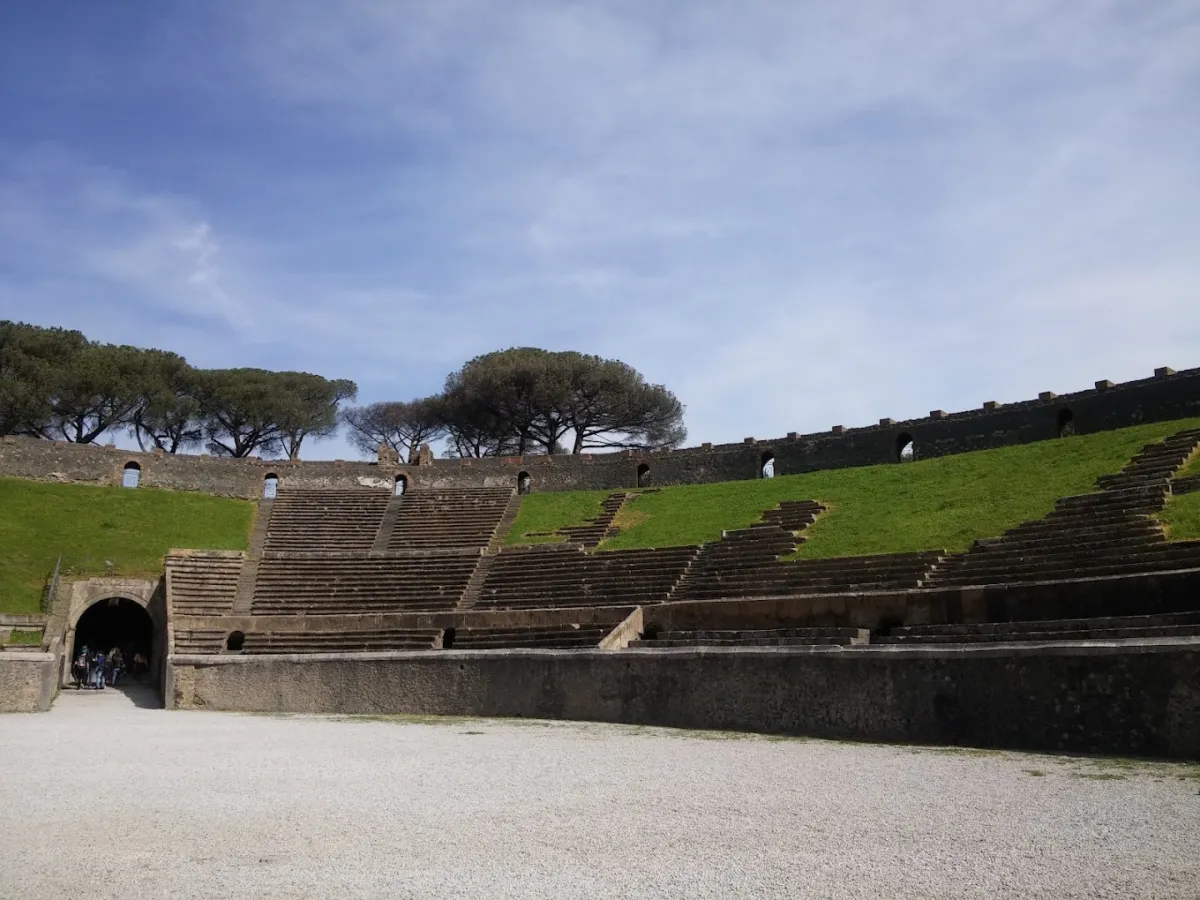
1. Amphitheater ❤️❤️
Built around 70 B.C., it is one of the oldest surviving Roman amphitheaters. It could seat about 20,000 spectators who came to watch gladiator battles. Its size impresses us right from the start of the tour. Pink Floyd also filmed their famous concert without an audience there in 1971.

2. Grande Palestre ❤️
This vast courtyard, surrounded by colonnades, was used for the physical education of young Pompeians. A permanent exhibition there features casts and organic remains. The preserved bread, chestnuts, figs, and other food items provide a very vivid picture of daily life. It is here that we truly begin to grasp the city’s scale.

3. House of Venus in the Shell
The garden is dominated by a large fresco depicting Venus riding on a seashell, surrounded by a setting that visually expands the space. This house is the perfect place to appreciate the importance of painted gardens in Pompeian residences. The interior has specific visiting hours, so be sure to check the opening times before heading to Regio II.

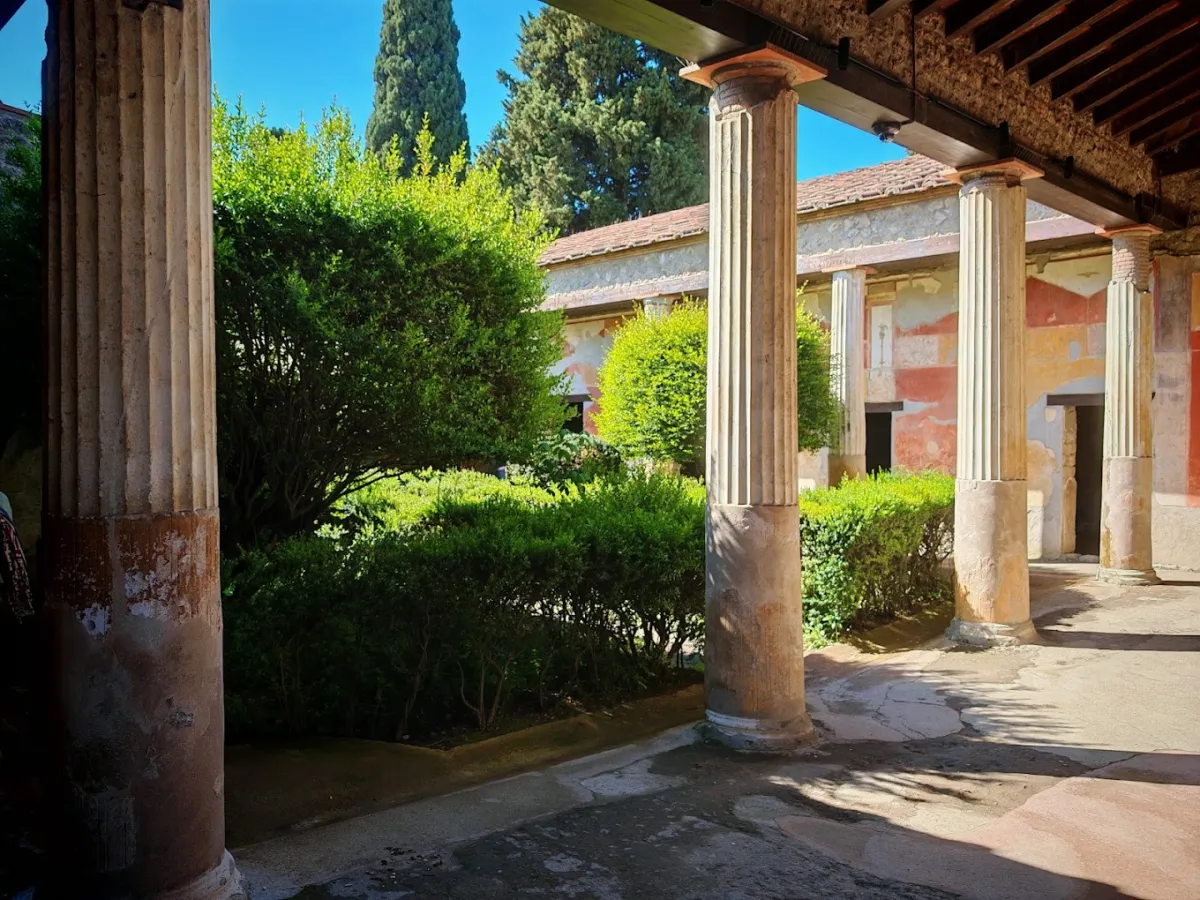
4. The House of Octavius Quartio
Also known as the House of Loreius Tiburtinus, it stands out for its long water channels, gardens, and summer triclinium. The owners had created a spectacular setting where architecture, frescoes, and vegetation complemented one another. Set aside a few minutes to explore the entire layout rather than just looking at the first few rooms.

5. Garden of the Fugitives
This former cultivated area features casts of thirteen victims who were caught off guard while fleeing. The group serves as a stark reminder that the city is not merely an archaeological setting. We don’t linger there long, as the scene is so gripping, but this section adds an essential human dimension to the visit.

6. Insula of the Chaste Lovers, or House of the Chaste Lovers
This large block combines residences, workspaces, and a bakery. It owes its name to a mural depicting two guests sharing a discreet kiss. The area was closed during our visit, and its access arrangements have changed significantly as a result of the excavations. It currently opens later than many of the other houses, which is something to keep in mind when planning a morning tour.


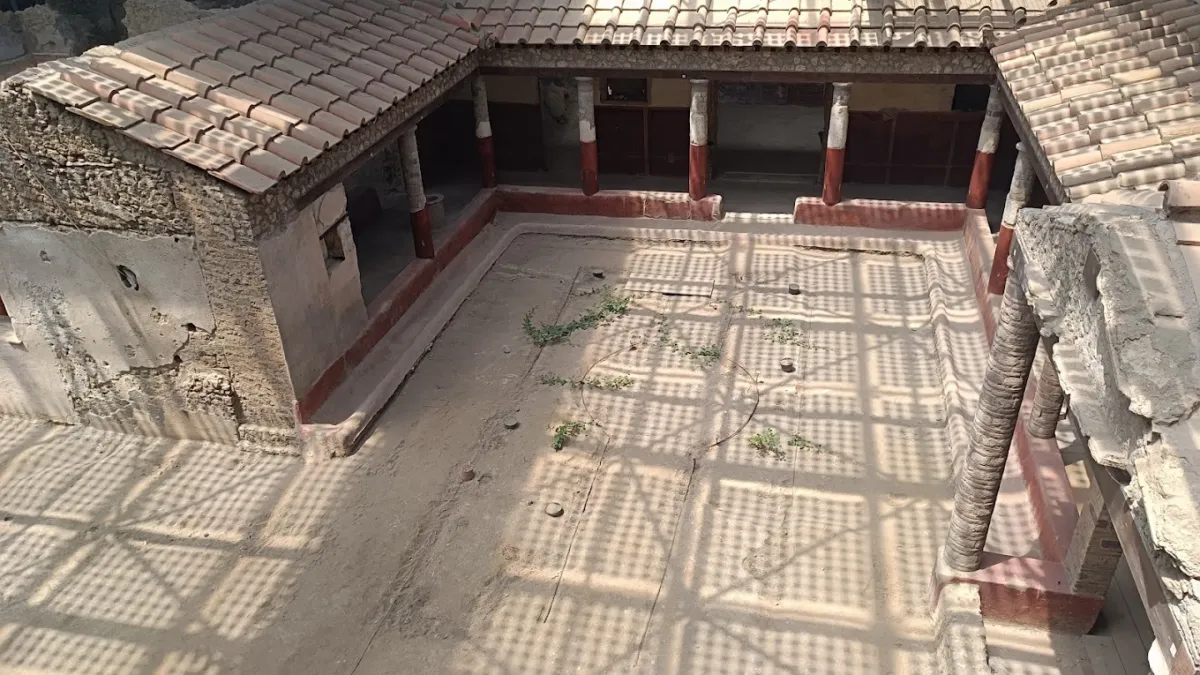
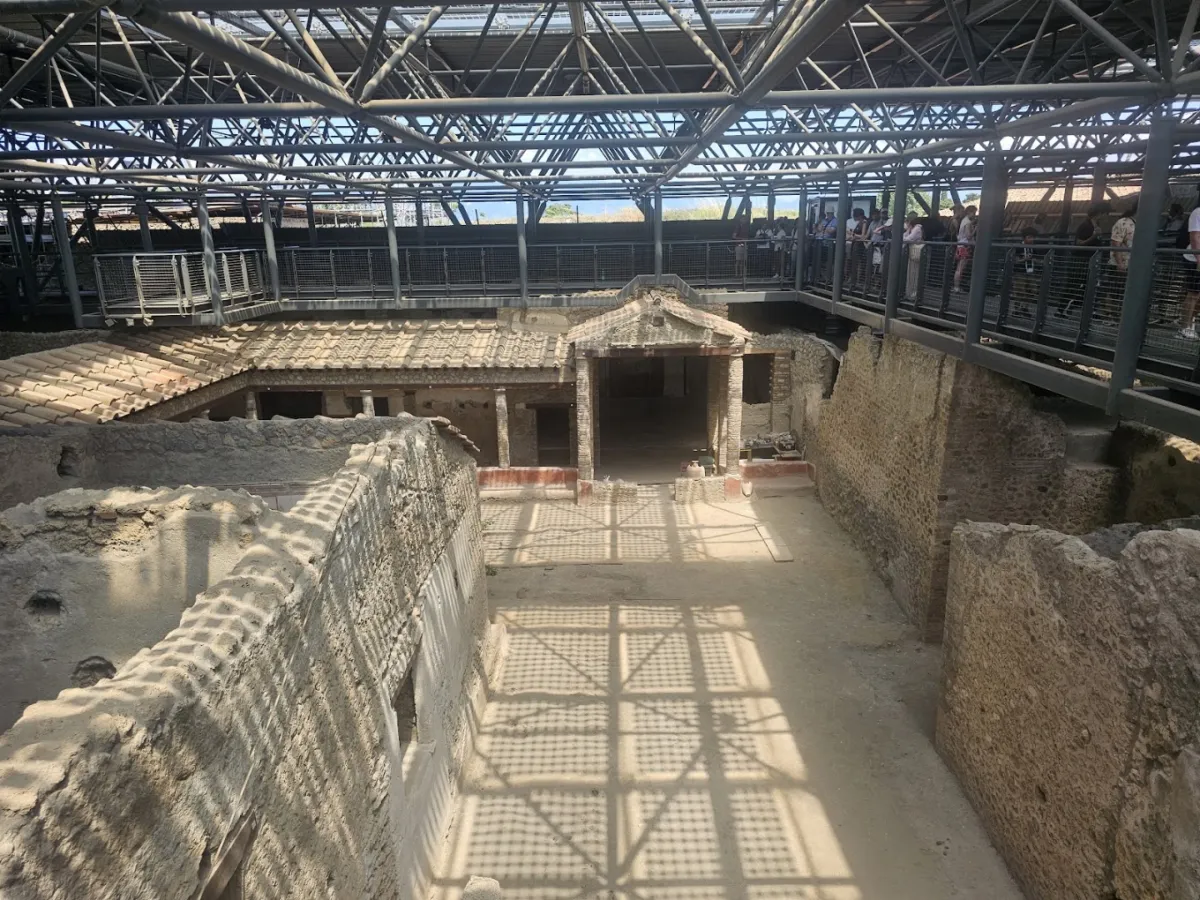
7. House of Lovers ❤️❤️❤️
This house is remarkable for its upper floor, which is still largely intact—a rarity in Pompeii. It illustrates better than many others that ancient dwellings were not limited to the ground floor. If it is closed on the day of your visit, Herculaneum offers the opportunity to see several very well-preserved two-story houses.
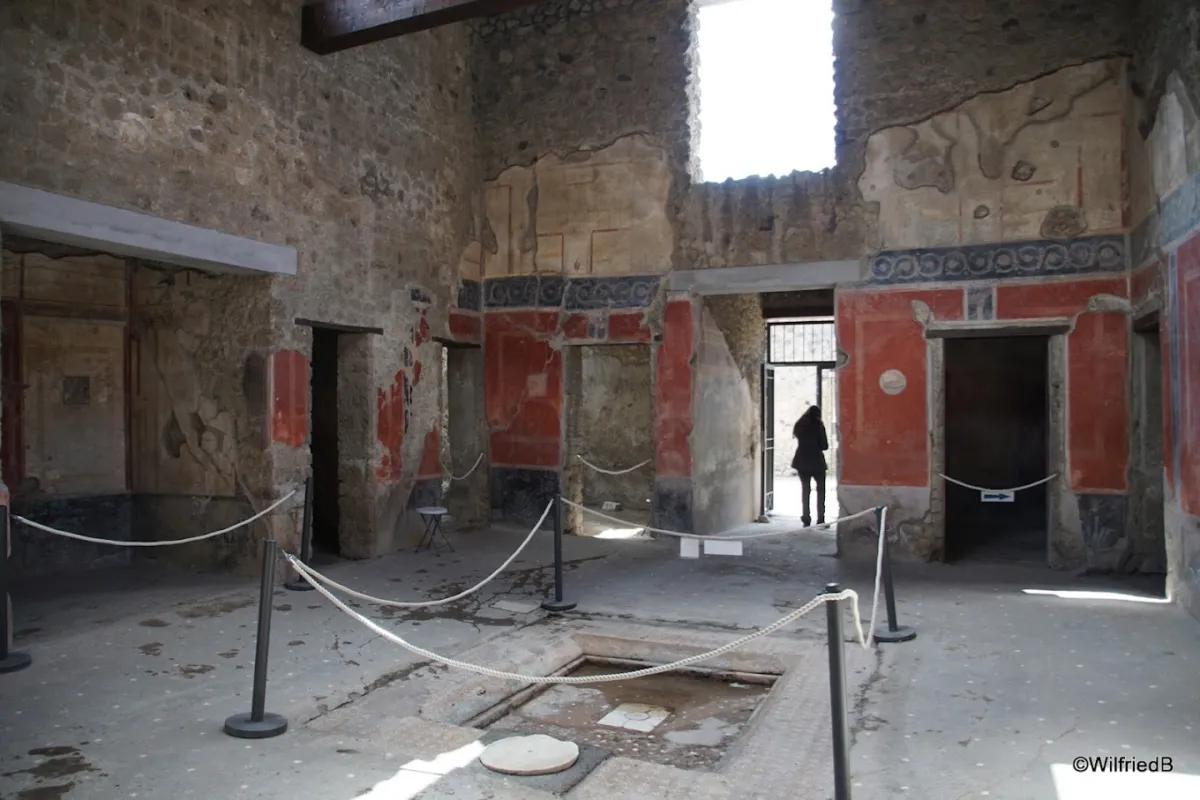

8. Maison du Ménandre ❤️❤️❤️
One of the largest and most elegant residences in Pompeii features an atrium, a peristyle, frescoes, service areas, and a small bath complex. Its name comes from a play by the Greek playwright Menander. Notice the differences between the reception rooms and the domestic areas, as well as the remains of the bathroom at the back of the house.


Via dell’Abbondanza and the Theater District
9. Stephanus’s *Fullonica*
This house, which has been converted into a laundry, offers insight into an essential trade in Pompeii. The former impluvium was used for washing fabrics, while basins were installed in the back and the terrace could be used for drying. The site clearly illustrates how residential and economic activities could be intertwined.


10. Vetutius Placidus’ Thermopolium ❤️❤️
Thermopolia were the city’s fast-food stands. Here, large jars—called dolia—are built into the counter, and a painted lararium symbolically protects the business. This thermopolium is currently visible from the street, but it remains one of the best places to imagine the locals eating and drinking throughout the day.

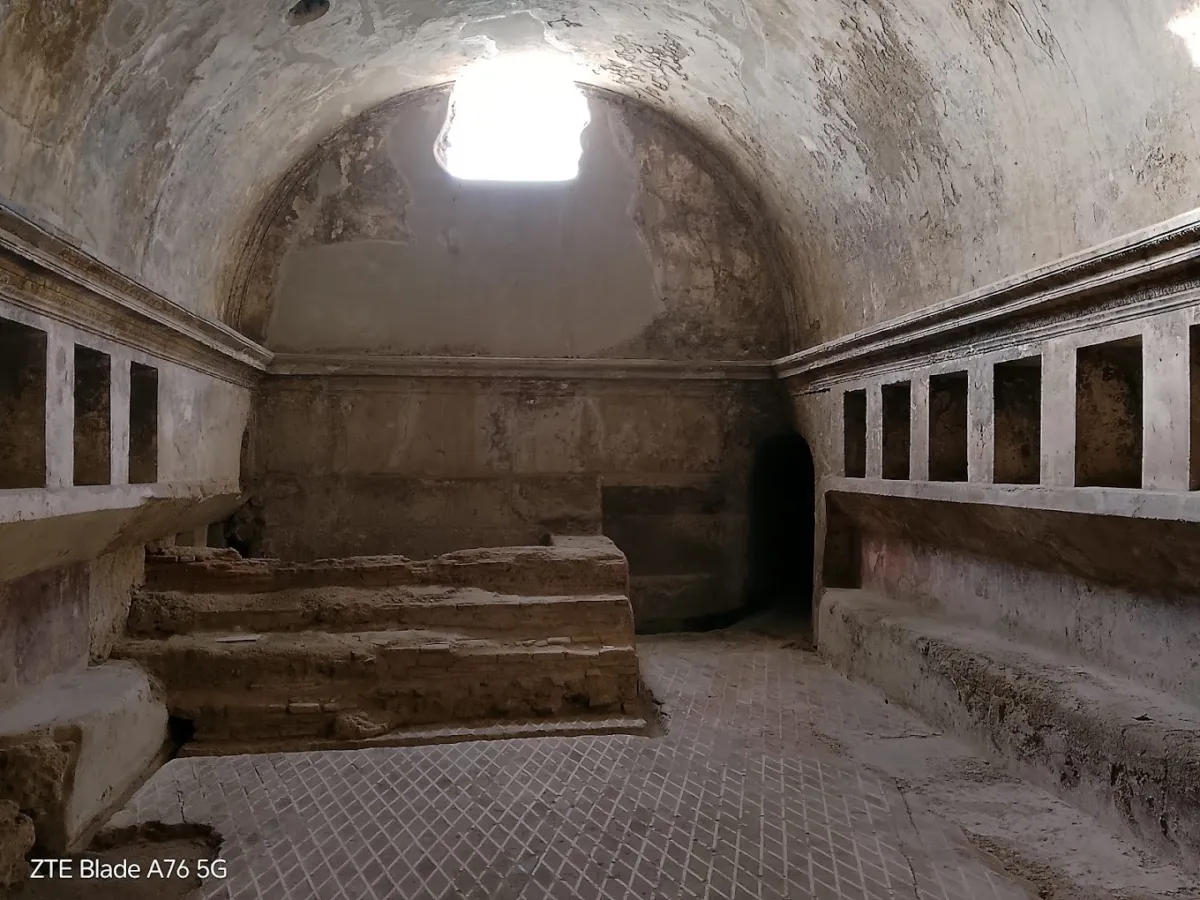
11. Stabiae Thermal Baths
One of the oldest known Roman baths, this complex retains the classic sequence of rooms: the changing room, the cold room, the warm room, and the hot room. The underfloor and wall heating systems demonstrate the technical sophistication of the Romans. The men’s and women’s sections were separate, and the spacious courtyard also included a swimming pool.


12. Brothel ❤️❤️
The most famous of the brothels identified in Pompeii is tucked away in a narrow alley. Small brick-walled rooms and erotic frescoes have been preserved. During our first visit, we heard a guide describe these images as a way to overcome language barriers. This interpretation remains a matter of debate. The site is small and quickly becomes crowded with tour groups.

Back then, we would sometimes pick up bits of information by listening in on the groups. Our second guided tour confirmed just how much an archaeologist can change the way we interpret the city. Take a look, too, at the deep wheel ruts in the nearby streets: they show just how heavy traffic was in ancient times.
13. Temple of Isis
This sanctuary dedicated to the Egyptian goddess was discovered with much of its decoration and furnishings intact. Rebuilt after the earthquake of 62 or 63, it bears witness to the spread of foreign religions throughout the Roman Empire. Its modest size contrasts with the richness of its history and the influence it had on the European imagination after its discovery.

14. Grand Théâtre ❤️❤️❤️
Built against the natural slope, the Grand Théâtre could seat approximately 5,000 spectators. The architecture makes use of the terrain to support the tiers of seating and direct the audience toward the stage. Some seating markings remain visible nearly two millennia later. Access to the interior may vary depending on construction work and events.
It’s often around this area that we start to come across more groups. Arriving right when it opens really makes the start of the hike more enjoyable.
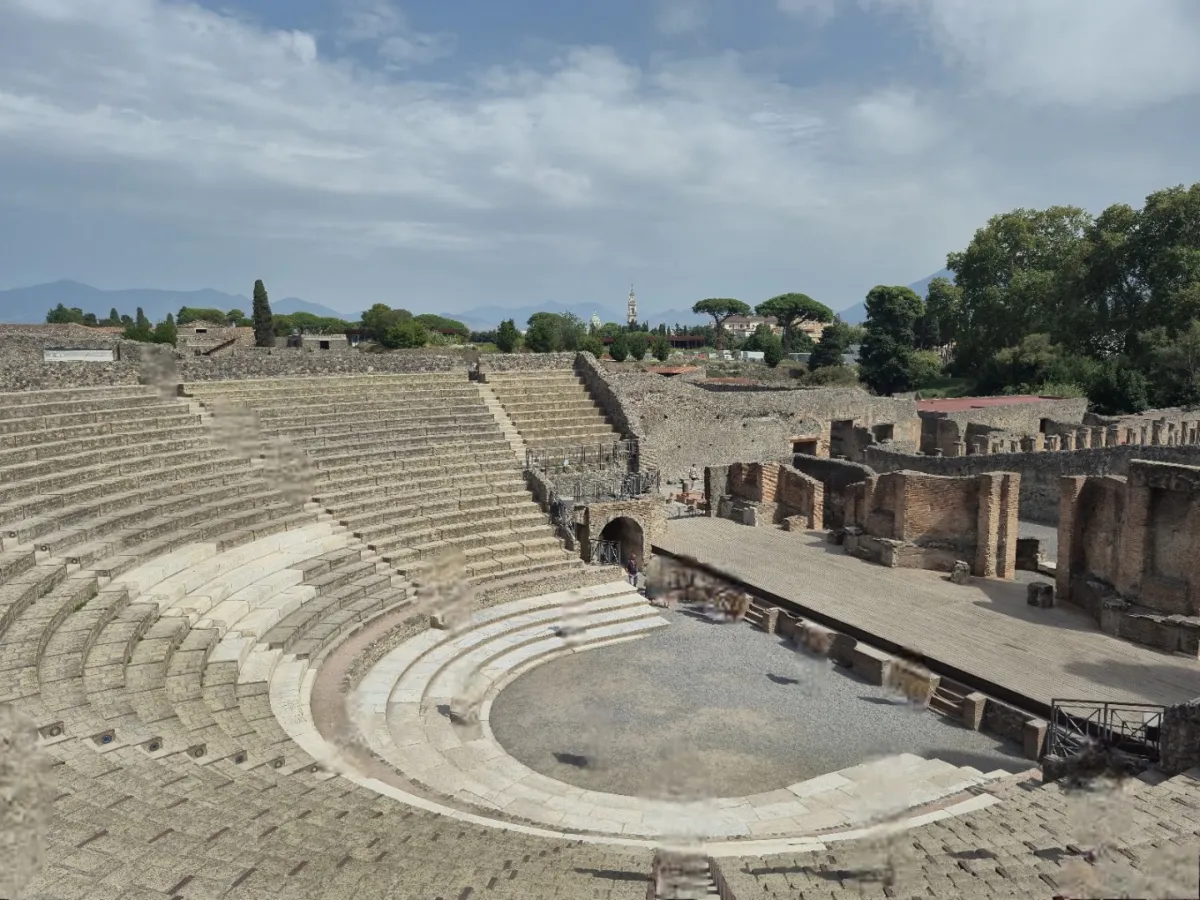
15. Petit Théâtre, or Odéon ❤️
More intimate than the Grand Théâtre, the Odéon was designed for music, mime, and recitations. Its roof likely improved the acoustics, and its tiered seating brings the audience closer to the stage. While access to the interior varies and it may only be visible from the outside, the pair of theaters remains essential.


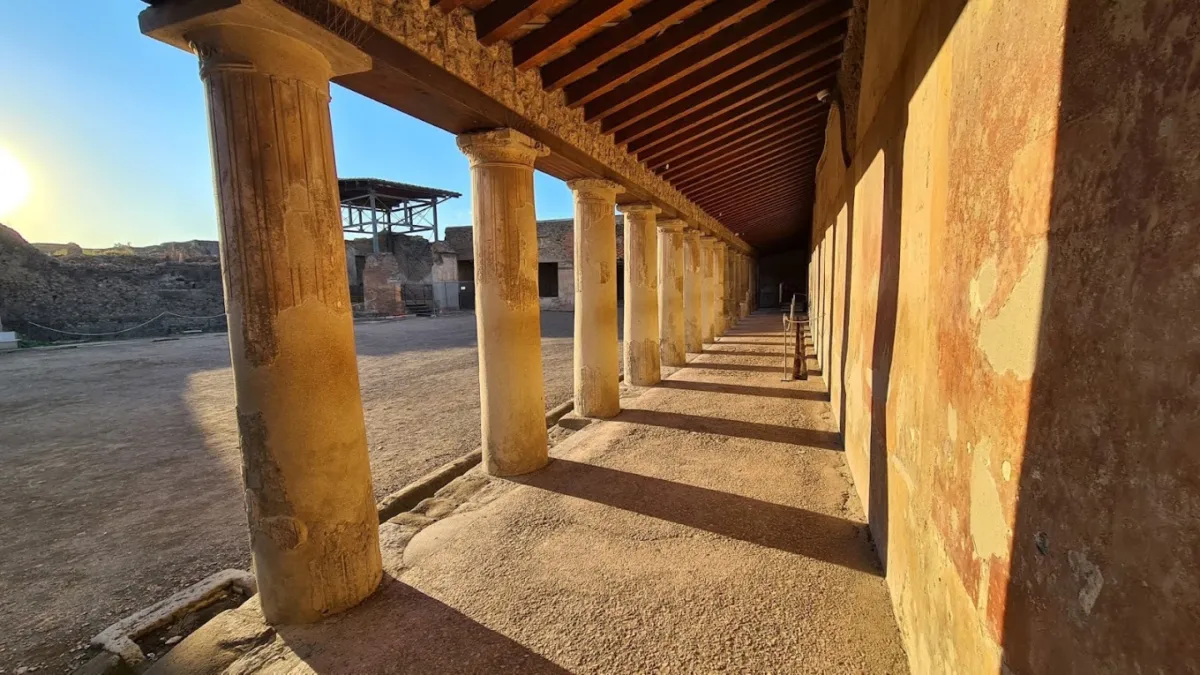
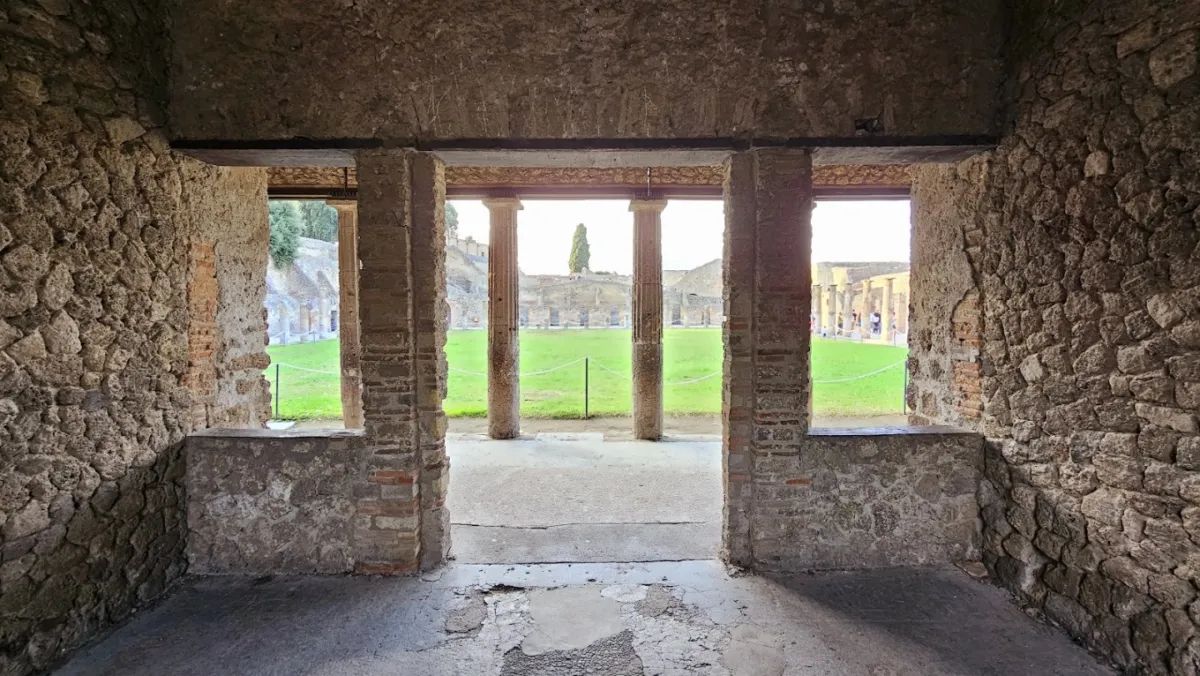
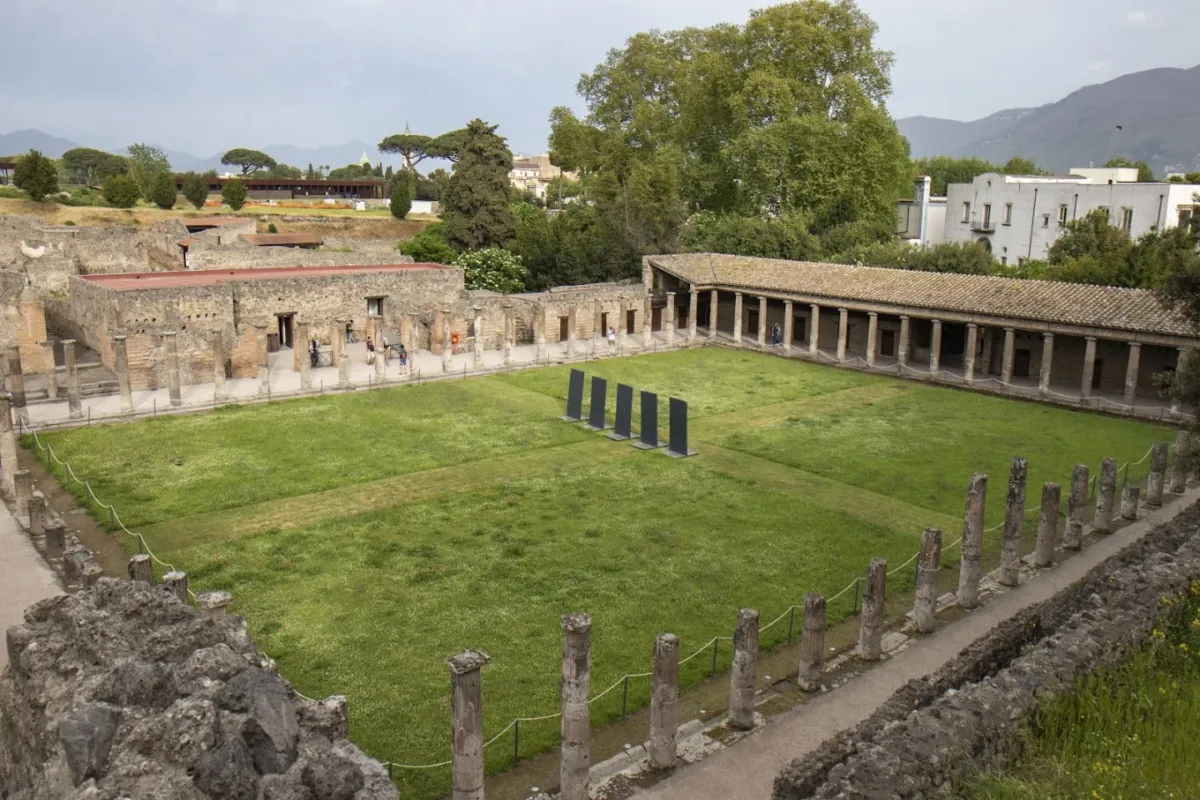
16. Quadriportico of the Theaters, or Gladiator Barracks
This large courtyard, surrounded by columns, originally served as the theater’s foyer. After the earthquake, it is said to have been converted to house gladiators. Rooms still open onto the portico. The passageway provides a seamless connection between the world of civic performances and that of the gladiatorial combats held in the amphitheater.
17. Triangular Forum
Perched on a spur overlooking the plain, this forum—which predates the Grand Civic Forum—features a Doric temple, porticoes, and unobstructed views. It offers insight into the city’s gradual development and its Greek influences. It also offers a pleasant respite between the theaters and the historic center.

Forum, Temples, and Mansions of the West
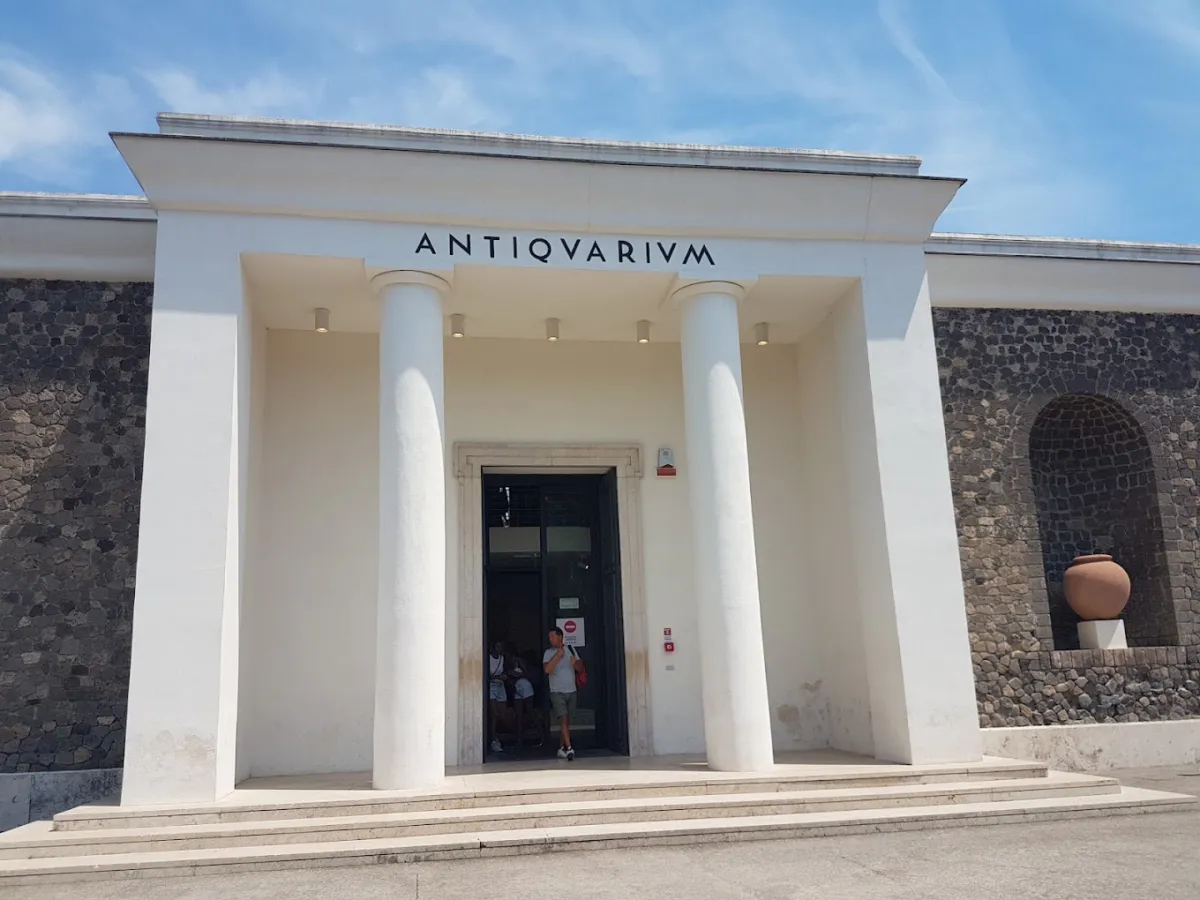
18. Antiquarium
The site’s museum puts the ruins into context with artifacts, casts, and a presentation on the history of Pompeii. We recommend visiting it first if you enter through Piazza Esedra, or last if you exit through Porta Marina. If you’re on a quick tour, stick to the main galleries to save time for exploring the city.
19. Shrine of Venus
Venus was the patron goddess of Pompeii. Her sanctuary is located on a terrace near Porta Marina, with an unobstructed view of the valley and the gulf. The temple was still under construction at the time of the eruption, which explains its unfinished appearance. The site helps illustrate the connection between religion, civic identity, and the landscape.

20. Basilica
The basilica is not a church: it was a vast building dedicated to business, gatherings, and justice. Its columns form three naves, and the court gallery dominated the space. The remains of marble-like decorations and graffiti allow us to imagine a very lively building on the edge of the Forum.


21. Forum ❤️❤️
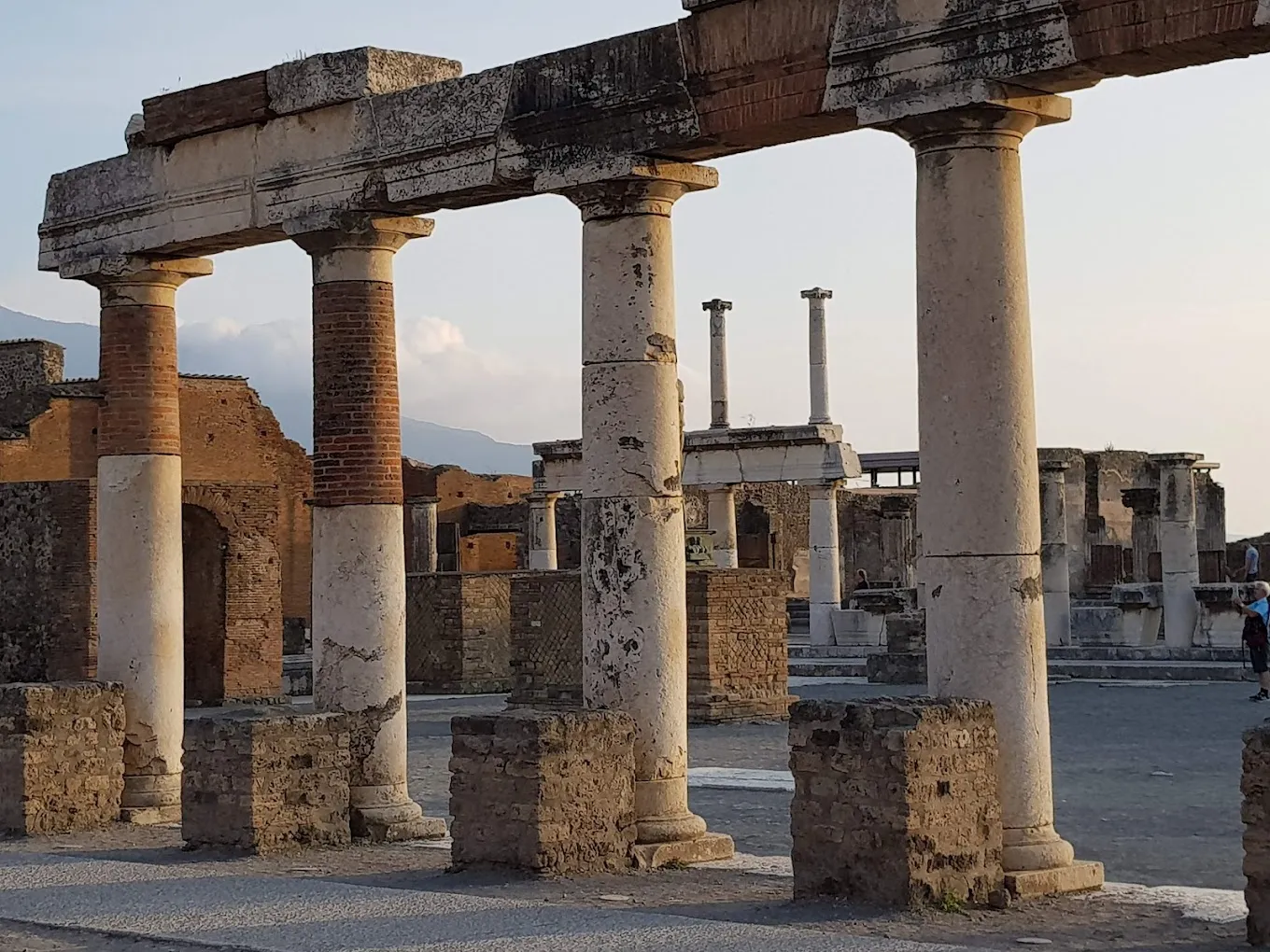
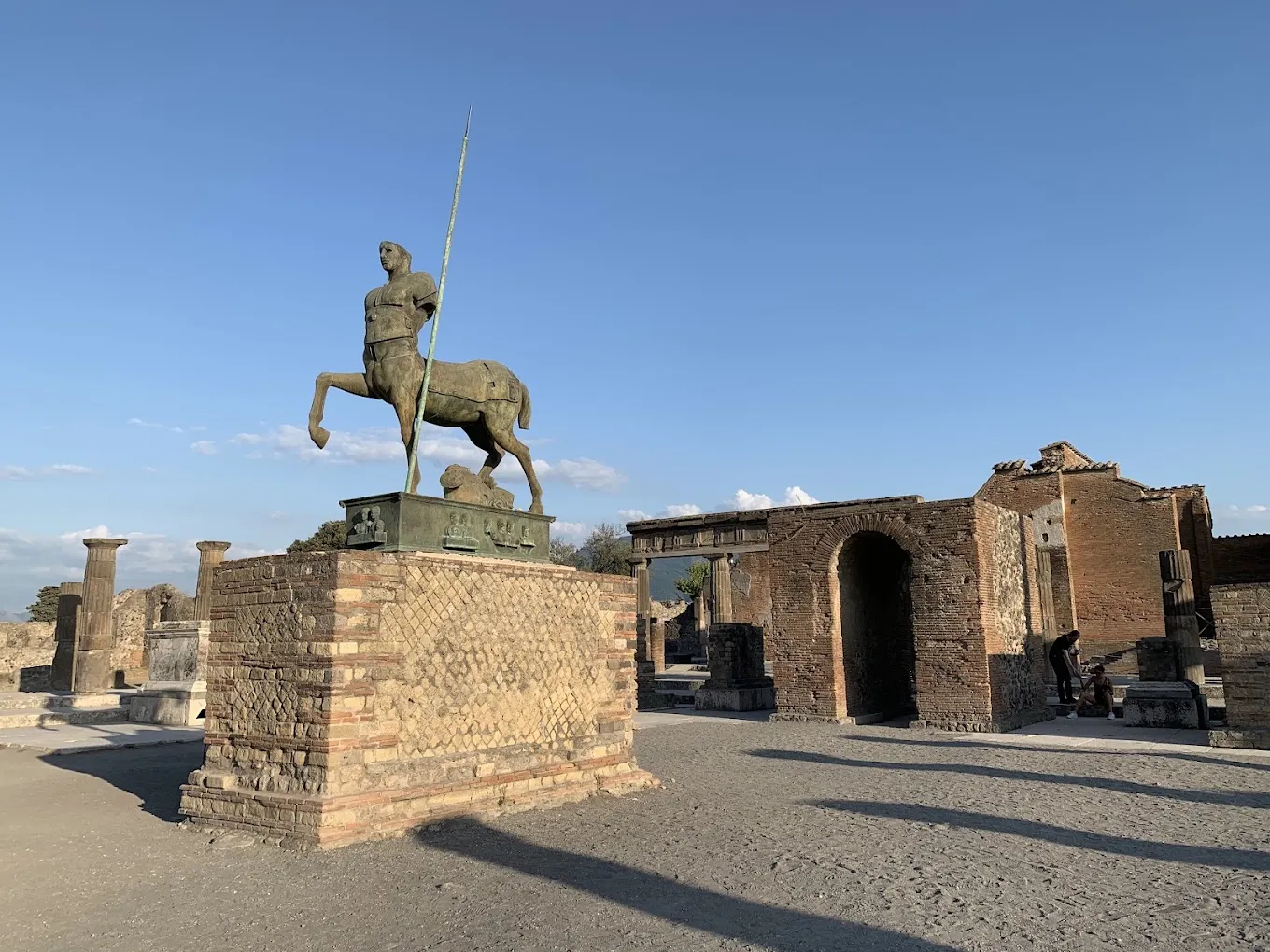
This square, measuring approximately 142 by 38 meters, was the political, economic, and religious heart of the city. It is home to the main civic buildings and offers a striking view of Mount Vesuvius behind the Temple of Jupiter. The floor was once paved with marble. Even when very crowded, the Forum remains one of our favorite views.

22. Sanctuary of Apollo
The Sanctuary of Apollo is one of the city’s oldest religious sites. A colonnade surrounds the temple, and replicas of the statues of Apollo and Diana evoke the ancient setting. From the portico, the columns frame stunning views of the Forum and Mount Vesuvius.

23. Temple of Jupiter
Located along the northern axis of the Forum, the temple’s tall base serves as a landmark across the entire square. The sanctuary was dedicated to Jupiter, and later to the Capitoline Triad, including Juno and Minerva. Mount Vesuvius looms just behind it, a view that has become one of the most famous images of Pompeii.

24. Macellum
The food market bordered the Forum. The shops were arranged around a central courtyard where fish and other foodstuffs were sold, among other things. Paintings and religious niches serve as a reminder that commerce and worship were closely linked. It’s a brief but very revealing glimpse into everyday economic life.


25. Eumachia Building
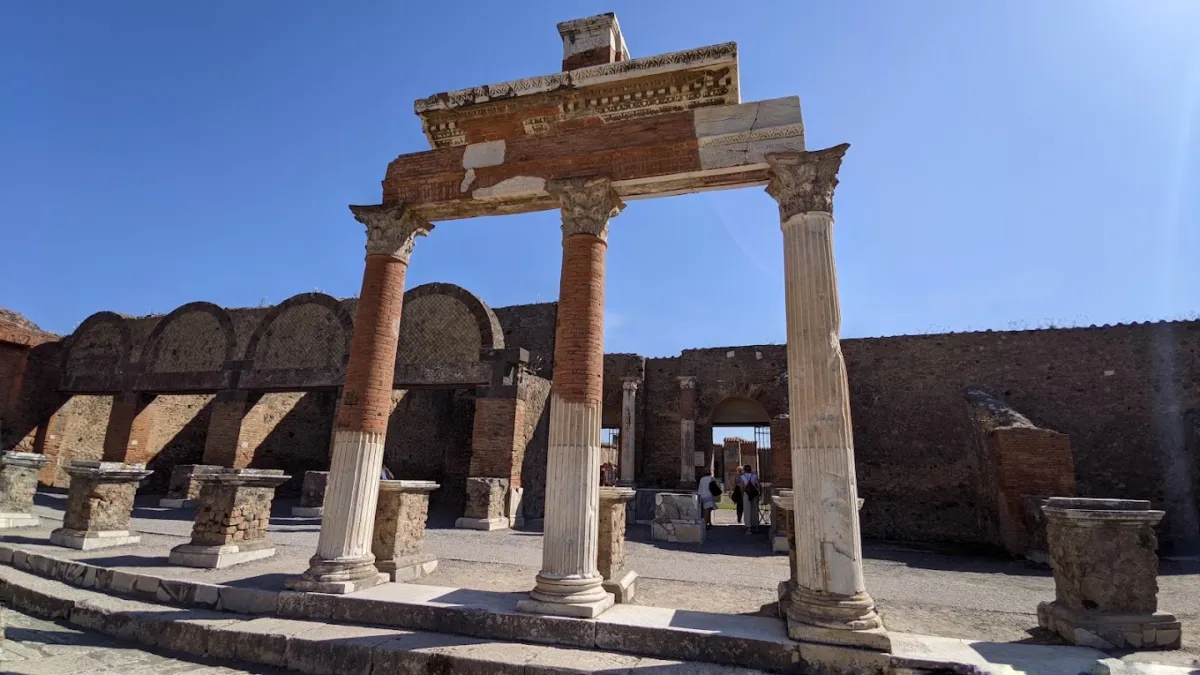
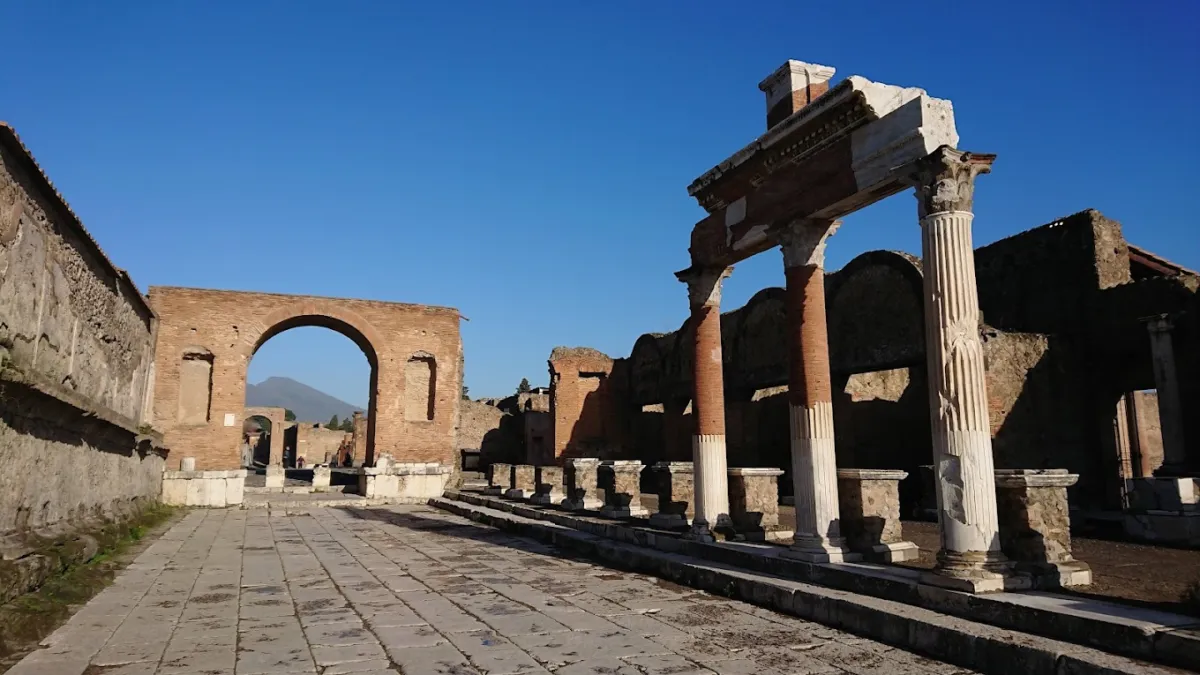
This large portico was funded by Eumachia, a priestess of Venus and a prominent figure in the city. Its exact function remains a matter of debate, but it is often associated with textile workers. The marble gateway, the long courtyard, and the dedicatory inscription demonstrate how a wealthy woman could assert her status in public life.


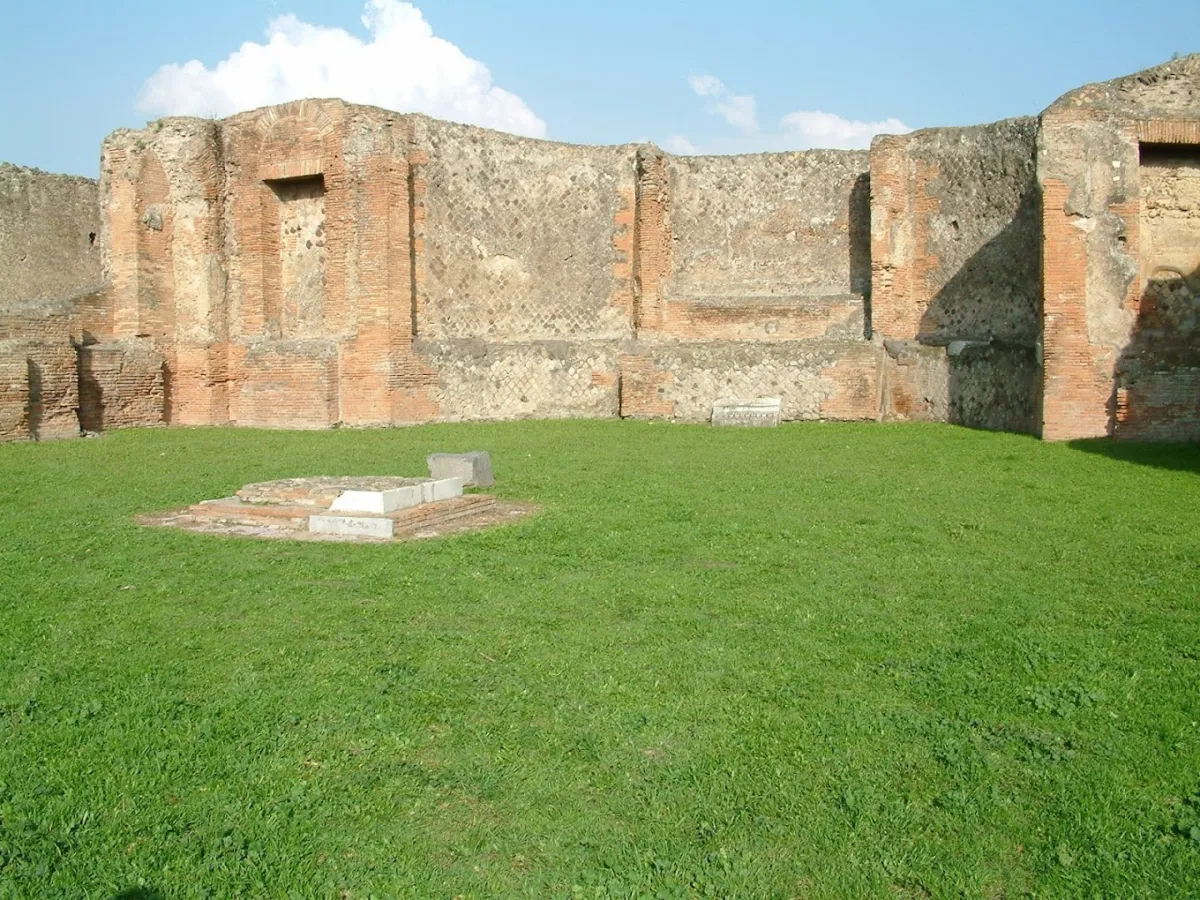
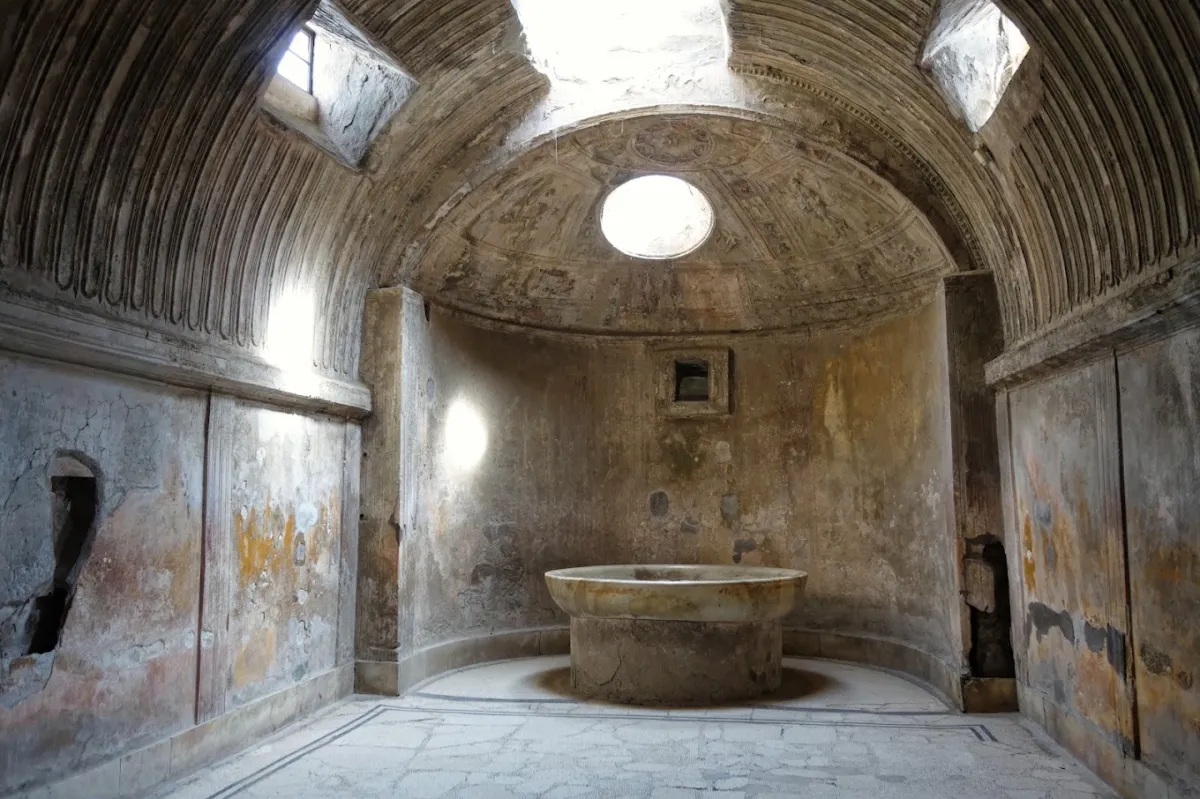
26. Forum Baths
Although more compact than the Stabiae Baths, they still feature magnificent vaults, benches, and particularly well-preserved stucco decorations. The path through the cold, warm, and hot rooms is contained within a compact space. It’s one of the best sites for understanding Roman baths if you’re short on time.

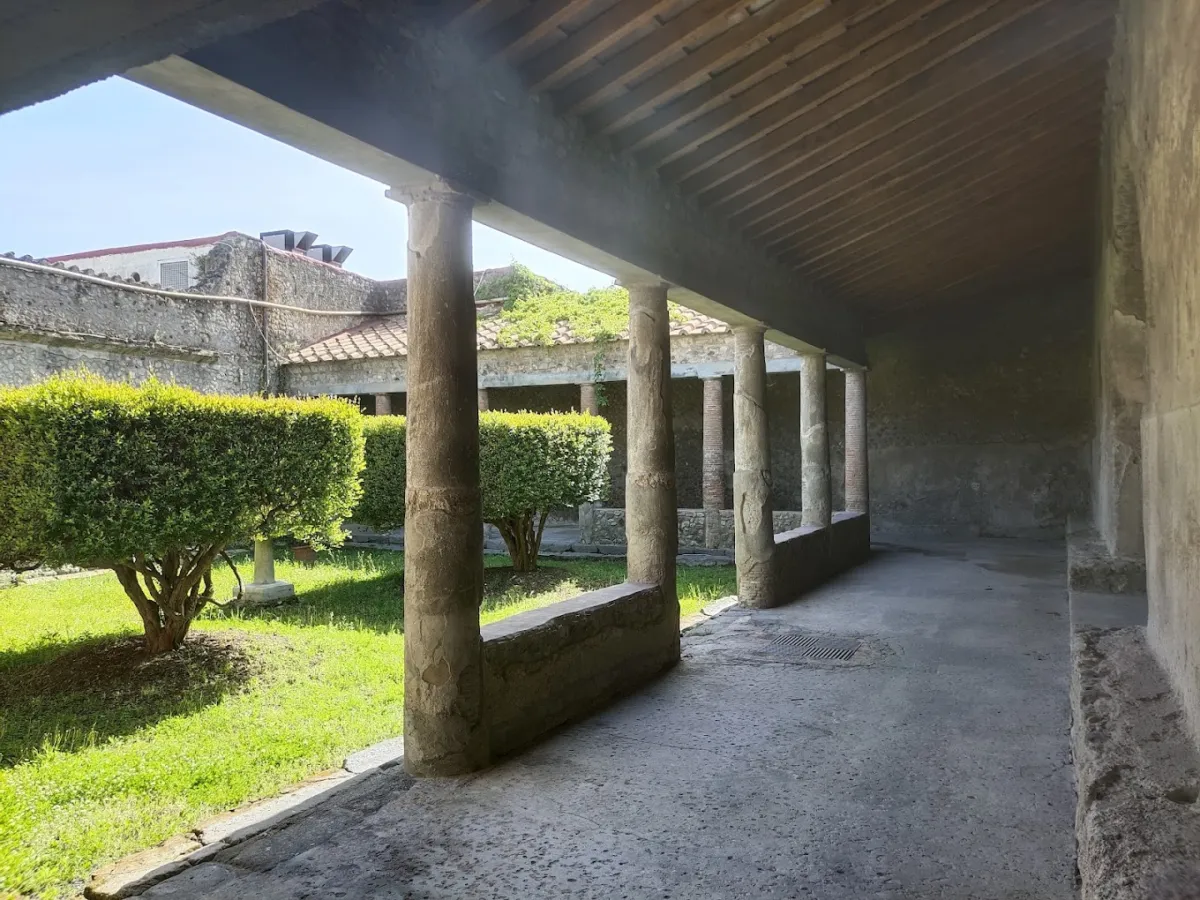
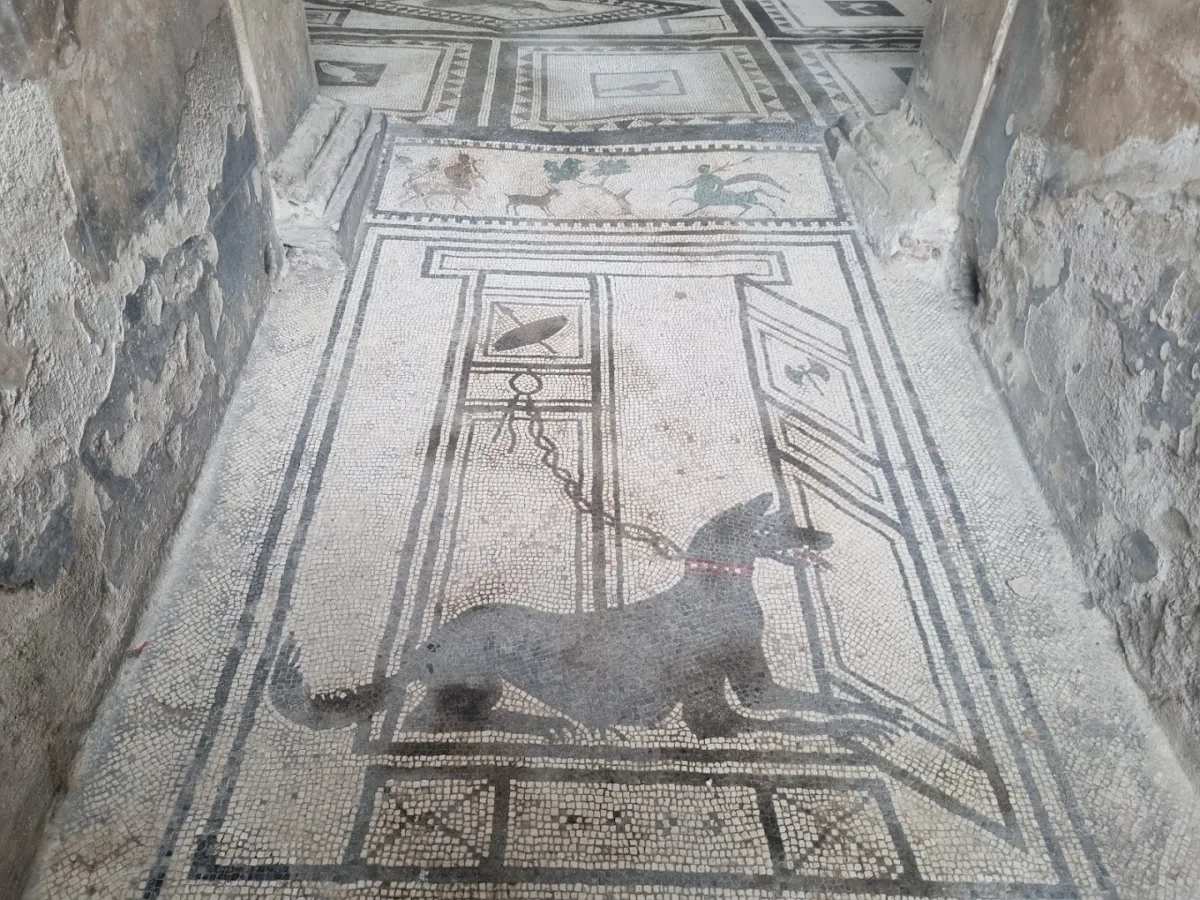
27. House of the Tragic Poet
This house is known for the “Cave Canem”(“Beware of the Dog”) mosaic located near the entrance. Several original decorative elements have been transferred to the Archaeological Museum of Naples. Nevertheless, the house remains an excellent introduction to the layout of a domus and the ways in which its owners showcased their culture.


28. House of the Faun
With nearly 3,000 m², it is one of the largest houses in Pompeii. The small statue of the dancing faun gives the site its name, while the famous Alexander Mosaic—now in the Archaeological Museum of Naples—once adorned a reception hall. Two atria and vast peristyles reveal the wealth of its owners.


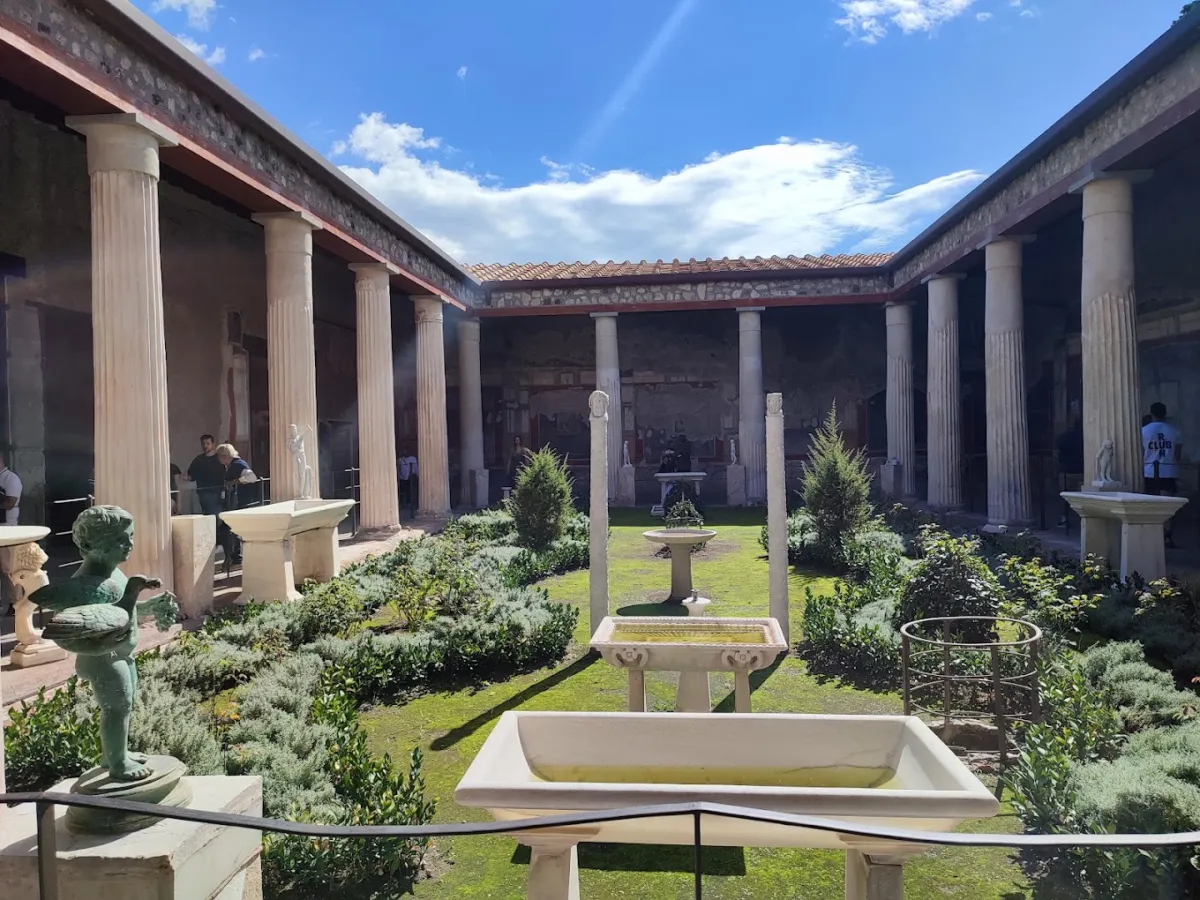
29. House of the Vettii
This restored house is one of the most spectacular on the site. It belonged to two former freed slaves who had become wealthy, and its highly elaborate decor showcases their success. The painted Priapus at the entrance, the mythological frescoes, and the colonnaded garden are well worth taking the time to explore. We rank it among the top priorities for a first visit.


Outside the walls of the ancient city
30. Villa of the Mysteries
Located beyond Porta Ercolano, this large villa combines residential spaces with agricultural activities. It is famous for a series of life-size red frescoes, often associated with Dionysian rites, although their interpretation remains a matter of debate. The detour requires time and either a Pompeii Plus ticket, a 3-day ticket, or the supplement sold by card at Porta Ercolano.

Three itineraries for visiting Pompeii in 2 hours, 3 hours, or 6 hours
These itineraries list the locations to visit in order. For each of the 2-, 3-, and 6-hour itineraries, our interactive map details the streets to take between each stop. The routes are for guidance only, as a street or building closure may require a detour. So be sure to have one or two alternative options in mind.
Visiting Pompeii in 2 Hours: The Express Tour
We recommend entering through Porta Marina Superiore, directly across from the Pompei Scavi – Villa dei Misteri train station, and then ending your walk at Piazza Esedra.
After passing through the entrance checkpoint, follow Via Marina towardthe Antiquarium and the Shrine of Venus, then head back up toward the Basilica and the Forum. Take a short detour to the Sanctuary of Apollo, cross the square to the Temple of Jupiter, and continue north to the House of the Faun and the Vettii House.
Then head back down Via delle Terme toward the Forum Baths, and continue on to Via degli Augustali and Vicolo del Lupanare. After the Lupanar, follow Via dei Teatri to the Grand Theater and the Small Theater. You can then exit via Piazza Esedra without having to return to your starting point.
If a house is closed, do not cross the site to replace it. Instead, add the Macellum, the Eumachia Building, or the Basilica, depending on your location.
Visiting Pompeii in 3 Hours: The Must-Sees and the Villa of the Mysteries
We recommend entering through Porta Marina Superiore, across from the Pompei Scavi – Villa dei Misteri train station.
Start withthe Antiquarium and the Shrine of Venus, then cross through the Basilica and the Forum to visit the Shrinesof Apollo and Jupiter, the Macellum, andthe Edifice of Eumachia. Then head up toward the Forum Baths and the Houses of the Tragic Poet, the Faun, and the Vettii, then follow Via di Mercurio, Via Consolare, and Via delle Tombe to the Villa of the Mysteries.
Head back along the same route, turn toward the Lupanar and the Stabiae Baths, then finish with the Triangular Forum, the theaters, the Quadriportico, and the Temple of Isis before exiting onto Piazza Esedra.
Three hours go by very quickly. If you want to take your time exploring the Villa of the Mysteries and the grand houses, exclude the Eumachia Building, the Triangular Forum, and the Quadriportico. Don’t try to include the amphitheater—it’s at the other end of the city.
Visiting Pompeii in 6 Hours: A Complete Itinerary for 30 Sites
To complete this tour in 6 hours, we recommend entering as soon as the site opens through Porta Marina Superiore, directly across from the Pompei Scavi – Villa dei Misteri train station. Once you’ve passed through security, follow Via Marina and start withthe Antiquarium. Next, head to the Sanctuary of Venus, then walk up toward the Basilica, which opens directly onto the Forum. Take a short detour to the Sanctuary of Apollo before crossing the square to the Temple of Jupiter.
From the Temple of Jupiter, head to the Macellum, located right next door, then walk south along the Forum tothe Edifice of Eumachia. Then head back northwest to visit the Forum Baths. Continue along Via delle Terme to the House of the Tragic Poet, then head up toward the House of the Faun and the House of the Vettii. These three houses are close together, but their opening hours may vary.
After the House of the Vettii, take Vicolo di Mercurio to reach Via Consolare. Pass through Porta Ercolano, then follow Via delle Tombe and the path leading to the Villa of the Mysteries. This is the longest detour on the itinerary. After your visit, return the same way to Via Consolare, then follow Via delle Terme and cross the city center toward the Lupanar. Continue along Vicolo del Lupanare to reach the Stabiae Baths.
From the thermal baths, head down toward Via dei Teatri and enter the Triangular Forum. Continue toward the Great Theater, then walk down into the Quadriportico of the Theaters. Next , head back toward the Small Theater, or Odeon, before finishing this section at the Temple of Isis. These monuments are very close together, and you can visit them one after another with very little walking.
Return to Via Stabiana, walk up to Via dell’Abbondanza, and head east. First, stop at Stephanus’s Fullonica, then continue on to the House of Menander and the House of the Lovers. Continue along Via di Castricio tothe Insula of the Chaste Lovers, then head back up toward the Thermopolium of Vetutius Placidus, located along Via dell’Abbondanza.
For the last part of the route, take Via di Castricio, then Vicolo della Nave Europa and Vicolo dei Fuggiaschi to reach the Garden of the Fugitives. Then head back toward Via dell’Abbondanza to explore the House of Octavius Quartio, followed by the House of Venus in the Shell. Continue east to the Great Palestra and finish atthe Amphitheater. The Piazza Anfiteatro exit is right next to it, which saves you from having to walk back across the entire site at the end of your visit.
If you’re arriving by car and need to return to the same parking lot, take this route in the opposite direction or allow about 20 to 30 minutes to walk around the park at the end. If your visit lasts more than 6 hours, you can take it slower, include the cemeteries, and more easily adjust to changes in opening hours.
Everything you need to know to plan your visit.
The cobblestones are uneven, the sidewalks are high, and the distances are long. A day in Pompeii requires real physical effort.
- hiking shoes or sturdy sneakers;
- a hat, sunglasses, and sunscreen;
- a light layer to protect against the wind or a rain shower outside of summer;
- a portable charger if your itinerary and tickets are on your phone;
- one small bag; luggage larger than 30 × 30 × 15 cm is prohibited.

Bring a water bottle: There are many drinking fountains along the ancient streets. They are marked on the site map, but a fountain may be temporarily out of service.
- For food: the self-service area and food counters at the Casina dell’Aquila are the main dining options inside the park.
- For a picnic: Prepare your meal before entering and eat only in designated areas. Eating among the ruins is prohibited.
- To catch your breath: Take advantage of shaded areas whenever you find them. They’re rare in the most exposed areas.


- Restrooms are located near the three entrances: the Casina dell’Aquila, the Antiquarium, the Quadriportico, and the Villa of the Mysteries.
- Paid luggage storage facilities are located at Porta Marina and Piazza Anfiteatro.
- Authorized audio guides are available at all three entrances upon presentation of a valid ID.
- There is a first-aid station near Vicolo degli Augustali.
- Retail locations and services are subject to change: please check the notices posted at the entrance.

We visited Pompeii with a toddler. A lightweight stroller can be helpful on the paved sections, but the cobblestones, steps, and sidewalks make some parts of the route difficult. A baby carrier is still useful for the less accessible houses.
- The “Pompeii for Everyone” tour begins at Piazza Anfiteatro and follows an accessible route to several major monuments.
- There are baby-changing stations on Via dell’Abbondanza, Via di Nola, and near the intersection of Via Stabiana and Via della Fortuna.
- Don’t feel like you have to follow the exact same order as other visitors. The best route is one that’s manageable for the whole family.

- Please keep your ticket (which is issued in your name) and a form of identification with you until you exit.
- The ticket does not allow you to leave and then return to the same site.
- Personal photos are allowed, but professional equipment, tripods, and drones require authorization.
- Small dogs that meet the official size requirements are allowed under certain conditions. Guide dogs are still permitted.
- Please respect the barriers and traffic flow, even if a detour seems faster.
Please review the official visitor guidelines before you leave.

How do you get to Pompeii, choose your admission ticket, and find parking?
Pompeii is located about 25 kilometers from Naples and is easily accessible by train, car, shuttle, or organized tour. Here are the easiest options from Naples, Sorrento, Herculaneum, and Rome.
Which appetizer should I choose?
We usually start at Piazza Anfiteatro, which is quieter in the early morning, and then walk across the city from east to west. If your train, ticket, or audio guide takes you to Porta Marina, just follow the route in the opposite direction.
- Porta Marina: Choose this entrance if you’re arriving via the Circumvesuviana and want to start with the Forum. The walkup is steep, and this area tends to be crowded with visitors.
- Piazza Esedra: It is also located near Pompei Scavi—Villa dei Misteri—and provides convenient access to the Antiquarium.
- Piazza Anfiteatro: It’s a great starting point for the 3-hour tour, the eastern section, and the accessible route. It’s also the most logical choice when coming from the modern city center and the Trenitalia Pompei train station.
An official mobile ticket allows you to proceed directly to the turnstiles. If your ticket requires you to pick up an audio guide at Porta Marina Superiore, start your tour on that side.
Where can I park near Pompeii?
The archaeological park does not have an official parking lot for visitors. Paid municipal parking spaces and several private parking lots are located around Porta Marina, Piazza Esedra, and Piazza Anfiteatro. Their rates and hours vary, and nearby spaces fill up quickly during the high season.
- Free option: Our map shows an area about a 15-minute walk away. Parking there is neither monitored nor guaranteed. Check the signs on the day of your visit and don’t leave anything in plain sight.
- Paid option: more convenient when traveling with children or luggage; book or check availability before arrival whenever possible.
Arrive before opening time to find a spot more easily, go through security at 9 a.m., and avoid the hottest part of the day.
Getting to Pompeii from Naples
Naples is the closest city to Pompeii and offers several convenient means of transport:
| Means of transport | Estimated duration | Estimated price | Details |
|---|---|---|---|
| Circumvesuviana train | 35 to 45 minutes | About €3.30 one way | The tour departs from Piazza Garibaldi in Naples, located beneath the central train station. Get off at Pompei Scavi – Villa dei Misteri. |
| Car | 30 to 50 min | Rental, Fuel, Tolls, and Parking | Take the A3 toward Salerno. The travel time depends heavily on traffic conditions. |
| Shuttle | About 40 minutes each way | Varies depending on the date | Reserve a seat on the shuttle departing from the City Sightseeing Naples terminal. |
| Organized excursion | Full day | Variable | Compare transportation, tickets, and guides—for example, with this Pompeii and Vesuvius tour from Naples. |
The Circumvesuviana train is generally the most economical and reliable option for avoiding traffic jams and parking problems.
Getting there from Sorrento
Sorrento, located on the Sorrentine Peninsula, is well connected to Pompeii:
| Means of transport | Estimated duration | Estimated price | Details |
|---|---|---|---|
| Circumvesuviana train | 35 to 45 minutes | About €3 one way | Depart from the Sorrento train station. Get off at Pompei Scavi – Villa dei Misteri. |
| Car | 40 to 60 min | Fuel and parking costs vary | Take the SS145. Traffic delays are common during the high season. |
The train avoids traffic delays and parking problems.

Getting to Pompeii from Herculaneum
Herculaneum, another ancient city preserved by the eruption of Mount Vesuvius, is just a few kilometers from Pompeii :
| Means of transport | Duration | Estimated price | Details |
|---|---|---|---|
| Circumvesuviana train | 20 to 30 min | About 2 to one-way | From Ercolano Scavi, take the line toward Sorrento and get off at Pompei Scavi – Villa dei Misteri. |
| Car | 25 to 40 min | Variable fuel, toll, and parking costs | Take the SS18 or the A3 toward Pompeii. |
It’s possible to visit Pompeii from Rome
A day trip from Rome is a long one, but it’s doable if you have a full day.
The fastest route is usually via Naples: take a high-speed train from Roma Termini, then head to Napoli Piazza Garibaldi to catch the Circumvesuviana.
By car, allow about 2½ to 3 hours each way, excluding major traffic delays, plus the time needed to park.
| Means of transport | Duration | Estimated price | Details |
|---|---|---|---|
| High-speed train | About 1 hour and 10 minutes to Naples, then 35 to 45 minutes on the Circumvesuviana, not counting the transfer | Varies depending on the advance notice and the train | Book the Rome-Naples trip separately, then purchase the local ticket for Pompeii Ruins – Villa dei Misteri. |
| Car | About 2½ to 3 hours each way | Variable fuel, tolls, and parking costs | Take the A1, then the A3 toward Pompeii. |
| Organized excursion | Full day | Variable | Compare transportation, included admission fees, time spent at the destination, and whether a guide is provided. |
An organized tour can make your day easier if you want to avoid transfers. Be sure to check how much time is actually scheduled for Pompeii before booking, though.


Where to eat in Pompeii, both on the site and nearby?
Inside the ruins, the Casina dell’Aquila houses the main cafeteria as well as stands selling drinks and local products. It’s convenient, but it can get very crowded at lunchtime.
If you don’t want to eat at a restaurant, buy your meal before you enter. Bring a compact picnic, a water bottle, and a bag for your trash. You must eat in designated areas—not in people’s homes or near monuments.
Our business address: Todisco
Todisco is just a stone’s throw from the ruins. We followed the advice in the Guide du Routard, backed up by positive online reviews, and we weren’t disappointed.
We enjoyed delicious gnocchi and excellent vegetarian lasagna at a reasonable price on the pleasant terrace. We even picked up some takeout for the evening. It’s a place we’re happy to recommend.
Where can I stay near Pompeii?

Rooms Garibaldi in Naples
If you’d rather stay in the center of Naples and come by train, Rooms Garibaldi is located near the central train station. We appreciated the location, the cleanliness of the room, and the bedding.
Our guide to the best neighborhoods also explains where to stay in Naples and which areas we avoid.
Preparing for Your Visit: Videos, Books, and Movies About Pompeii
A few points of reference before entering the ruins will completely transform your visit. You’ll be able to more easily recognize a domus, a thermopolium, the various rooms of the baths, and the purpose of the large buildings in the Forum.
Videos and Documentaries to Watch
- It’s Not Rocket Science: Pompeii, a clear, family-friendly introduction. Thanks, Jamy!
- This short video on the layout of a Roman domusis helpful for understanding the houses before touring them.
- “Pompeii: Its New Secrets,” a documentary series focusing on the recent excavations in Regio IX and the work of archaeologists.
- “Pompeii: The New Dig,” a BBC and PBS series that follows a major excavation campaign and connects the discoveries to the lives of the city’s inhabitants.
- Pompeii: Out of Time with Tom Hiddleston, a National Geographic documentary series released in 2026. Check its availability on your streaming platform and in your country.
Books to help you understand or build on your visit
- *Pompeii: Life in a Roman City* by Mary Beard: the most reliable choice for understanding the society, homes, businesses, and the limits of what archaeology can reveal.
- *Pompeii* by Robert Harris: a historical novel centered on the aqueduct and the signs foreshadowing the eruption. It’s a very easy read, but it’s still a work of fiction.
- *The Last Days of Pompeii* by Edward Bulwer-Lytton: the19th-century classic that shaped the modern imagination of the city.
- The Official Guide to the Excavations: a more descriptive volume, organized by region, which should be consulted to identify each house and place the decorations in their proper context.
Movies and Visual Experiences
- *Pompeii* (2014), directed by Paul W. S. Anderson: a spectacular disaster movie. Watch it for the atmosphere, not as an accurate historical reconstruction.
- *Journey to Italy* (1954), by Roberto Rossellini: the sequence set at the Pompeii excavation site uses the discovery of a couple as a pivotal moment in the narrative.
- Pompeii 360: a short immersive animation produced by ARTE, focusing on the day of the eruption.
The availability of documentaries and films varies by platform. To prepare for the visit without spending an entire evening on it, start by watching *C’est pas sorcier*, then read the chapters by Mary Beard devoted to houses and street life.
The fascinating history of Pompeii
Designated a UNESCO World Heritage Site, Pompeii is accessible even to those who aren’t historians. We aren’t historians ourselves: these few points of reference are mainly intended to help you better understand the streets, houses, and monuments during your visit.
From ancient origins to Roman greatness
Long before it became one of the world’s most famous archaeological sites, Pompeii developed from several settlement centers beginning in the early centuries of the 1st millennium B.C. Its exact origins remain a matter of debate, but Oscan, Greek, Etruscan, and Samnite influences gradually shaped its architecture and customs. Located on a fertile lava plateau near the mouth of the Sarno River, between the sea and the mountains, the city occupied a strategic commercial position. It came under the influence of the Samnites and later became Roman following the Social War.
A vibrant yet deeply unequal Roman city
Pompeii became a Roman colony under Sylla, and was renamed Colonia Cornelia Veneria Pompeianorum. At this time, the city was at its most prosperous: splendid patrician villas, public baths, an amphitheatre, a monumental forum and countless shops bear witness to its flourishing prosperity. Its population is estimated at between 10,000 and 20,000. The walls of the houses are covered with colorful frescoes, the floors are adorned with mosaics, and the streets vibrate to the rhythm of the markets, the baths and the rumors of the forum.
The ruins reveal a bustling city. Residents bought their bread at bakeries, ate at thermopolia, visited the baths, attended performances, and read election posters painted on building facades. Public fountains supplied water to the neighborhoods, while the homes of the wealthiest residents featured gardens, ponds, and reception rooms.
This prosperity is also rooted in deep inequalities. Free citizens, freedmen, women, foreigners, and enslaved people did not occupy the same place in society. Service areas, workshops, graffiti, and everyday objects are therefore just as important as the large murals for understanding Pompeii.
The city also faced serious trials. In A.D. 59, a bloody riot broke out in the amphitheater between residents of Pompeii and Nocera; Tacitus recounts it in his *Annals*. Then, a violent earthquake in 62 or 63 AD damaged part of the city. The residents undertook major reconstruction efforts, which were still unfinished at the time of the eruption.


The eruption of Mount Vesuvius in 79 AD: a tragedy frozen in time
Inthe fall of 79 A.D., perhaps on October 24, Vesuvius erupted violently. A massive column of ash and gas rose above the volcano, while pumice stones piled up over the city, causing roofs to collapse. Many residents fled, while others sought shelter. In the final phase, powerful pyroclastic flows reached Pompeii. In less than 24 hours, the city was buried under several meters of volcanic material.
The letters of Pliny the Younger, who witnessed the eruption from across the bay, are a major source of information on the disaster and on the rescue effort led by his uncle, Pliny the Elder. Archaeology complements this account by reconstructing the sequence of pumice falls, collapses, and pyroclastic flows.
The excavations revealed the positions of many victims: some were seeking refuge in buildings, while others were trying to flee. The plaster casts made from the hollows left by the bodies capture these frozen moments, with human silhouettes preserved in their final gestures. These poignant impressions serve as a reminder that behind the site’s beauty lies a profoundly human tragedy.
The layer of ash and lapilli destroyed lives, but it also preserved walls, floors, objects, and organic remains. This exceptional preservation is why Pompeii allows us to glimpse an entire city—from public monuments to meals, graffiti, and everyday activities.
For a long time, the disaster was believed to have occurred on August 24. A charcoal inscription dated to October, autumn fruits, and other archaeological evidence now support the hypothesis of a later eruption. The exact date, however, remains a matter of debate.

From rediscovery to major archaeological digs
After the catastrophe, memories of Pompeii gradually faded. In the 16th century, workmen digging a canal accidentally rediscovered some ancient walls. But it wasn’t until 1748 that the first serious excavations began under the reign of Charles III de Bourbon. Houses, frescoes and everyday objects were unearthed, and the whole of Europe marveled at this “rediscovered world”.
In the 19th century, archaeologist Giuseppe Fiorelli introduced a revolutionary method. He divided the city into regions (regiones) and islets (insulae), numbered each house and invented the technique of plaster casts, giving a face to the victims of the eruption. These actions, both scientific and profoundly human, made Pompeii a unique site in the world.
Since then, research has continued unabated. New areas continue to be studied: Regio V, for example, has revealed striking frescoes, a remarkably well-preserved thermopolium, and numerous graffiti. In 1997, Pompeii was designated a UNESCO World Heritage Site. The Great Pompeii Project subsequently made it possible to restore dozens of homes, secure fragile structures, and modernize the public exhibition.
Today, Pompeii is much more than a site frozen in time: it’s a living archaeological laboratory, where 3D technologies, photogrammetry and paleobotanical studies are helping us to better understand the daily life of the Romans. With each excavation campaign, new discoveries emerge: frescoes, inscriptions, objects, sometimes even the remains of domestic animals. Each find adds a new page to the history of a city eternally suspended in ashes.
Nearly one-third of the ancient city remains intentionally unexcavated. The goal is no longer to uncover everything at any cost, but to preserve what is already visible and to leave areas for future generations to study using better methods. The work carried out by Regio IX shows that the history of Pompeii is still being written.

What to do around Pompeii?
The Naples region is full of places to explore. One trip is rarely enough to enjoy the city, the islands, the ancient sites, and the coast.
Naples and its islands
We definitely recommend visiting Naples. Its Mediterranean atmosphere, narrow streets, and cuisine are worth spending several days exploring. Many of the artifacts, mosaics, and frescoes discovered in Pompeii are on display at the National Archaeological Museum in Naples.
The islands in the Gulf, including Capri, offer a lovely getaway during your stay. From Naples, the trip by hydrofoil generally takes about 50 minutes, depending on the port and the route.
Discover Herculaneum
As you can probably tell, we absolutely loved Herculaneum. In our opinion, it’s just as much a must-see as Pompeii, with buildings that are sometimes even better preserved. Yes, it’s possible!

Climb to the summit of Vesuvius
The volcano is the region’s other must-see attraction. Prepare for your climb up Vesuvius: access to the crater, transportation, and weather conditions all require a bit of planning ahead.

Enjoy the Amalfi Coast
We haven’t explored the Amalfi Coast yet—which is a great reason to come back. From Pompeii, take the Circumvesuviana to Sorrento—about 35 to 45 minutes depending on the train—then a SITA bus to the coastal villages. During peak season, expect to wait and check the schedules on the day of your trip.

Pompeii is one of the most surprising places we’ve explored. It’s a tiring day, but walking through this city and gaining a little more insight into everyday life in Rome remains an unforgettable experience.
We hope this guide will help you plan your visit. Let us know in the comments when you’re leaving, or ask us any questions you may have—we’ll be happy to answer them. If you found this article helpful, you can also rate it 5 stars below.



0 commentaires