




Our discovery of the archaeological site of Herculaneum was one of the great successes of our stay in the Naples region. Less vast than Pompeii, it offers a much more legible and immersive visitor experience, which really surprised us.
To be totally transparent, we even preferred Herculaneum to its famous neighbor. The ruins are less extensive than Pompeii, and the visit is quick, but the state of preservation is remarkable, making exploration particularly enjoyable.

This unspoilt atmosphere almost gives you the sensation of walking through a city frozen in time, just before the eruption of Mount Vesuvius. That’s why many people ask:
Is it worth visiting Herculaneum?
Yes, and we’ll tell you why!
- An exceptional state of preservation
- A visit on a human scale
- A pleasant site even without historical knowledge
- A complete discovery in 1 to 2 hours
- A panoramic view on arrival
At the end of the article, you’ll find our detailed map with recommended itinerary, must-see points and useful addresses to help you organize your visit.
Practical information and tickets for Herculaneum
Address and access
Corso Resina 187, 80056 Ercolano, Metropolitan City of Naples, Italy
How do I get there?
- By train: From Naples, take the Circumvesuviana line to Ercolano Scavi station (about 20 minutes). The entrance to the site is 500 m down Via 4 Novembre.
- By car: Free unsecured parking lots close to the site, or private pay parking lot at the foot of the ruins (approx. €5/hr).
- By shuttle: Some excursions include a transfer from Naples (subject to availability in GetYourGuide offers).
Tickets
Single admission or ticket
We recommend a guided tour in French to better understand the site, which has very few explanatory panels.
Opening hours
- Summer period (April to October): 9 am to 7:30 pm, last admission at 6 pm.
- Winter period (November to March): 8:30 a.m. to 5 p.m., last entry at 3:30 p.m.
- Closed: January 1, May 1, December 25.
Tip: Arriving at the opening is the most comfortable option for avoiding groups, especially in high season.
Best time to visit
- April to June and September to October: pleasant temperatures and moderate visitor numbers.
- In summer: hot weather and groups arriving mid-morning. Give preference to opening.
First Sunday of each month: free admission (busy season).
The must-see tour
Before your visit
We highly recommend the documentary “C’est pas sorcier Pompei“, as well as this video explaining the organization of a Roman house (domus).
If you can, stop by the Museo Archeologico Virtuale the day before. It was closed at the time of our visit, but the 3D film on the eruption is often recommended as preparation for the visit.
The museum will provide a better understanding of daily life in Herculaneum and Pompeii. We look forward to hearing from you.
Let’s go for the visit of Herculaneum
The view from the entrance bridge immediately identifies the port area, the main streets and the general organization. You’ll start your tour in the maritime district.
Afterwards, we recommend you stroll freely through the site’s preserved alleyways. They reveal the houses, baths, workshops and shops virtually intact, making for a very lively visit.
Explanatory signs are almost non-existent. If you want a more informative tour, a French-speaking guide is a real plus.
Here are a few highlights we recommend you not to miss:
1. Suburban spas
These baths are among the best preserved on the site. You can still see the basins and superb mosaics on the floor.
2. Deer House
Casa dei Cervi is one of the most elegant residences on the site. It boasts magnificent mosaics and well-preserved frescoes, and its vast garden offers a view that once overlooked the sea.

3. Telèphe relief house
The Casa del Relievo di Telefo is the second largest villa in Herculaneum. Its bright red columns and extensively restored impluvium make it a remarkable place to visit.


4. Taverns
The small thermopolias are very well preserved. The original counters, terracotta jars and openings to the street are a perfect illustration of commercial life.

5. Maison de la belle cour
In Casa del bel Cortile, don’t miss thestone staircase leading to the upper floor. The access is somewhat hidden, which explains why many visitors miss it.
This is probably one of the most impressive spaces on the site.
6. Store and house of Neptune and Amphitrite
This store is remarkable for the reconstruction of its floors, based on elements found during excavations. Amphorae lined up in rows recall the commercial activity of the district.
The wall mosaic dedicated to Neptune and Amphitrite is one of Herculaneum’s finest decorations, still inlaid with original shell fragments.


7. Decumanus maximus (street)
At the far end of the site, this main thoroughfare offers a complete view of the stores, the inscriptions still visible and the boundary between ancient and modern.
This explains why the entire area beyond is still buried beneath the contemporary city.


8. House with wooden partition
The Casa del tramezzo di legno features an exceptionally well-preserved wooden panel separating the atrium from the tablinum, as well as the remains of a bed.

Why visit Herculaneum?
Its conservation
The town of Herculaneum (Ercolano), located very close to Vesuvius, was buried under a thick layer of volcanic material, sometimes up to 20 metres thick. This accumulation provided exceptional protection for the dwellings.
As a result, wall paintings, wooden elements, furniture and façades are still visible. This level of preservation is unique in the region, and provides a clear picture of Roman architecture.
The upper floors have also been better preserved than in Pompeii, enabling us to understand the precise volumes and organization of the houses.

Its moderate number of visitors
The site welcomes around 300,000 visitors a year, a far cry from Pompeii’s 3 million. This difference really changes the perception of the visit.
When we arrived at the opening, we wandered through the narrow streets almost alone. Towards midday, the crowds increase, but remain reasonable by Pompeii standards.
In Pompeii, the narrow streets and small houses make groups sometimes overwhelming. Herculaneum offers a much smoother pace.
Its small size
Only a quarter of the ancient site has been excavated, with the modern city resting on a large part of the ruins. This reduced format makes for a clear and efficient visit.
The entrance is via a panoramic walkway that immediately reveals the general structure of the site. An ideal vantage point from which to understand the organization before beginning the tour.

The site is ideally located
Herculaneum lies exactly between Naples and Pompeii, making it easy to fit into a day’s itinerary.
Many travellers even combine a morning visit to Herculaneum with an afternoon ascent of Mount Vesuvius, as the two sites are very close to each other.
The routes are short and straightforward, making this a very convenient stopover to organize.
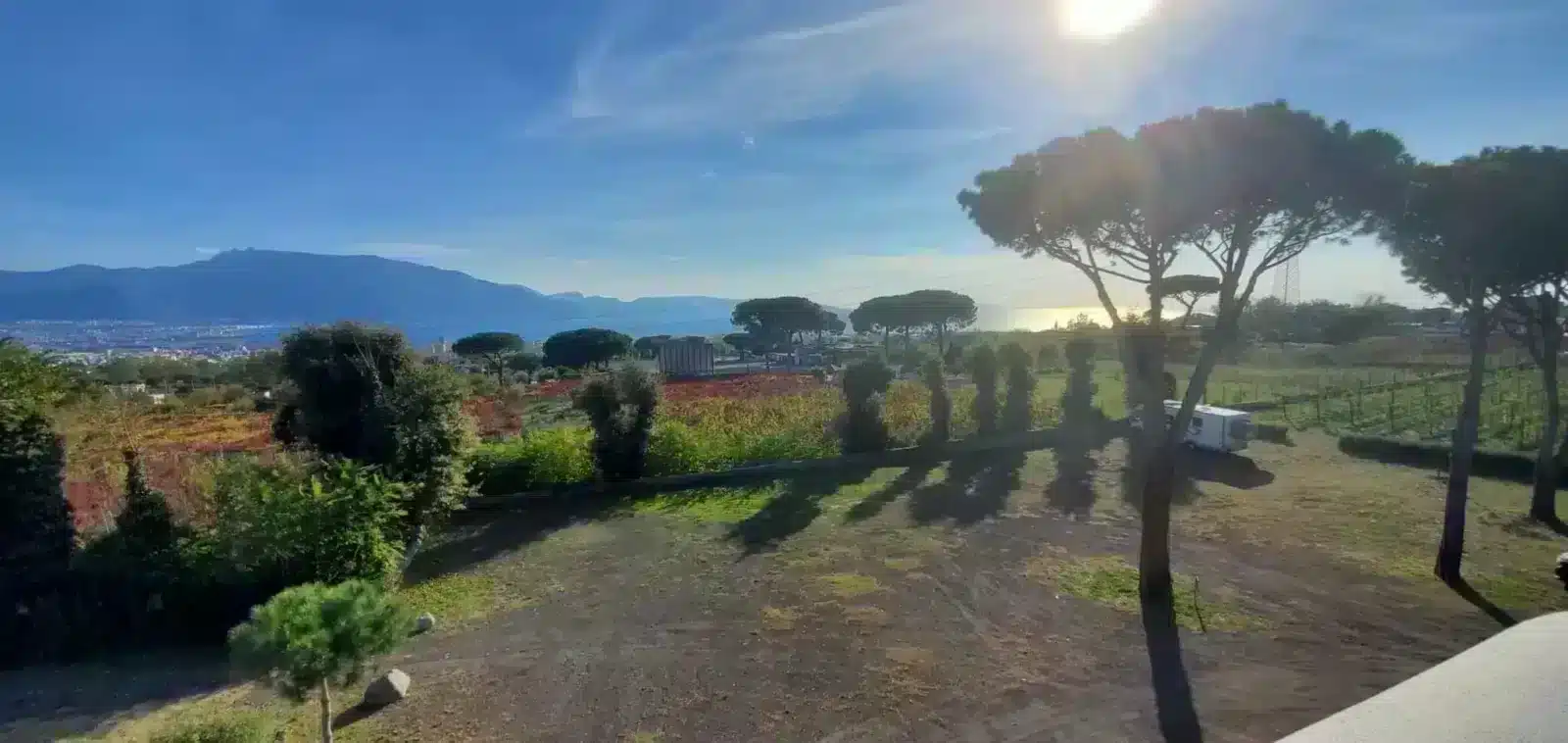
The incredible history of Herculaneum
Herculaneum was once a fishing port and farming village with a population of around 4,000. The region’s wealthy families had built splendid villas here, particularly on the seafront.
In October 79, the eruption of Mount Vesuvius threw up an avalanche of ash and material that buried the entire town under almost 20 meters of water.
Close to the epicenter, Herculaneum was protected by this dense layer, which explains its spectacular state of preservation.
The great public buildings remain buried beneath the modern city, making Pompeii an indispensable addition to our understanding of Roman life as a whole.

How long does it take to visit Herculaneum?
Allow around 3 hours for a complete, untroubled visit. By comparison, it takes several days to cover the entire surface of Pompeii.
Visit Herculaneum or Pompeii?
It’s difficult to set these two sites against each other, as they complement each other so well. However, our experience of the Herculaneum archaeological park convinced us that it deserves a place on an itinerary around Naples. Here’s why it stood out for us.
How do I get to Herculaneum from Naples or Pompeii?
Just 15 km from Naples and Pompeii, Herculaneum is easy to reach. Here are the most practical options.
By train from Naples or Pompeii
The Circumvesuviana line from “Napoli Centrale” reaches the “Ercolano Scavi” stop in about 20 minutes. Tickets cost €2 and the entrance to the site is just 500 meters away.
From here, simply walk down Rue du 4 Novembre. You can then continue towards Pompeii on the same line if you wish.
By car
We chose the car because we were traveling out of season. Driving in Naples can be a bit confusing, but the area around Herculaneum is quieter.
Free parking is available a few meters from the site (unsecured). We have indicated this on our map.
Secure parking is also available at the foot of the ruins (€5 per hour). We recommend arriving early in high season.
How to get to Naples?
From France, you’ll regularly find flights for around €30. Use a flight comparison tool to find the best deals quickly.
We also recommend a 1-day visit to Naples and, if you have a little more time, the island of Capri.

Where can I buy tickets to visit Herculaneum?
There are two ways to buy your tickets:
- Ticket on site or online. You can avoid the wait by purchasing a ticket (€19) on the French reservation site.
- Campania Artecard: interesting if you’re planning several cultural visits. Please note that Vesuvius is not included. Full details on the official website.
Why and how to book a guided tour in advance?
The site has no explanatory panels. This is very surprising for a site of such historical importance. So a guided tour is a real added value.
On site, most visitors opt for a guide, both at Herculaneum and Pompeii.
We would have appreciated more information on the spot, even if we had prepared the visit well in advance.
Please find below our links to book your guided tour in French.
Where to sleep to be the first on the site?
To make the most of the site, arriving as soon as it opens is an excellent strategy. Sleeping nearby makes organization much simpler.
Hotels in Herculaneum are inexpensive and within walking distance of the entrance to the site. The town itself is not very touristy, which makes it good value for money.
➡️A Herculaneum: Ruins B&B The rooms are pleasant and the bedding extremely comfortable. The staff are lovely. The hotel is located opposite the ruins, so it’s perfect for being the first on the site, and has a superb terrace! Secure parking is available for €10.
You can also sleep in Naples or Pompeii. Here are our recommendations:
➡️ In Pompeii: we stayed at Il Vecchio Fauno, ideally located just a 5-minute walk from the ruins and the railway station. Spacious room, tastefully decorated and very good breakfast.
The hosts are very welcoming and the free parking is a real plus in this touristy area.
In Naples, we’ve put together a comprehensive guide to recommended neighborhoods and those to avoid. You can consult it here: Where to stay in Naples.
➡️ In Naples: we also recommend the Garibaldi Rooms, perfectly located near the central station and the historic center.
Where to eat a good pizza near Herculaneum?
Right next door to the site is Pizzeria Ro.Vi. Despite its very touristy location, it serves good, generous pizzas at reasonable prices. An effective break before or after your visit.

How do I get to Vesuvius?
The only access road to Vesuvius starts from Herculaneum. If you’re planning to climb up to the crater, this could be an excellent next logical step after visiting the site.
By bus
The Vesuvio Express service, located in front of the Herculaneum station, connects the volcano in 30 minutes for €10 return.
It’s essential to book your Vesuvius ticket online (€10). On-site tickets are more expensive and often unavailable.
Time on site is limited to 1h30, which means you’ll need to keep up a steady pace to reach the summit.
By car
From Herculaneum, the road to Vesuvius is well signposted. Parking costs €5, and minibuses take you up to the ticket office 2km up the hill (€1 per person).
Please note: without prior reservation, it is very common to arrive at the ticket office and not find a place to visit the crater.
As you’ll have gathered, we found the visit to Herculaneum both fascinating and highly rewarding. In our opinion, it’s a must-see for anyone traveling in the Naples area.
Thank you for reading. If you’re planning a trip or have a question, don’t hesitate to leave a comment below.



0 commentaires